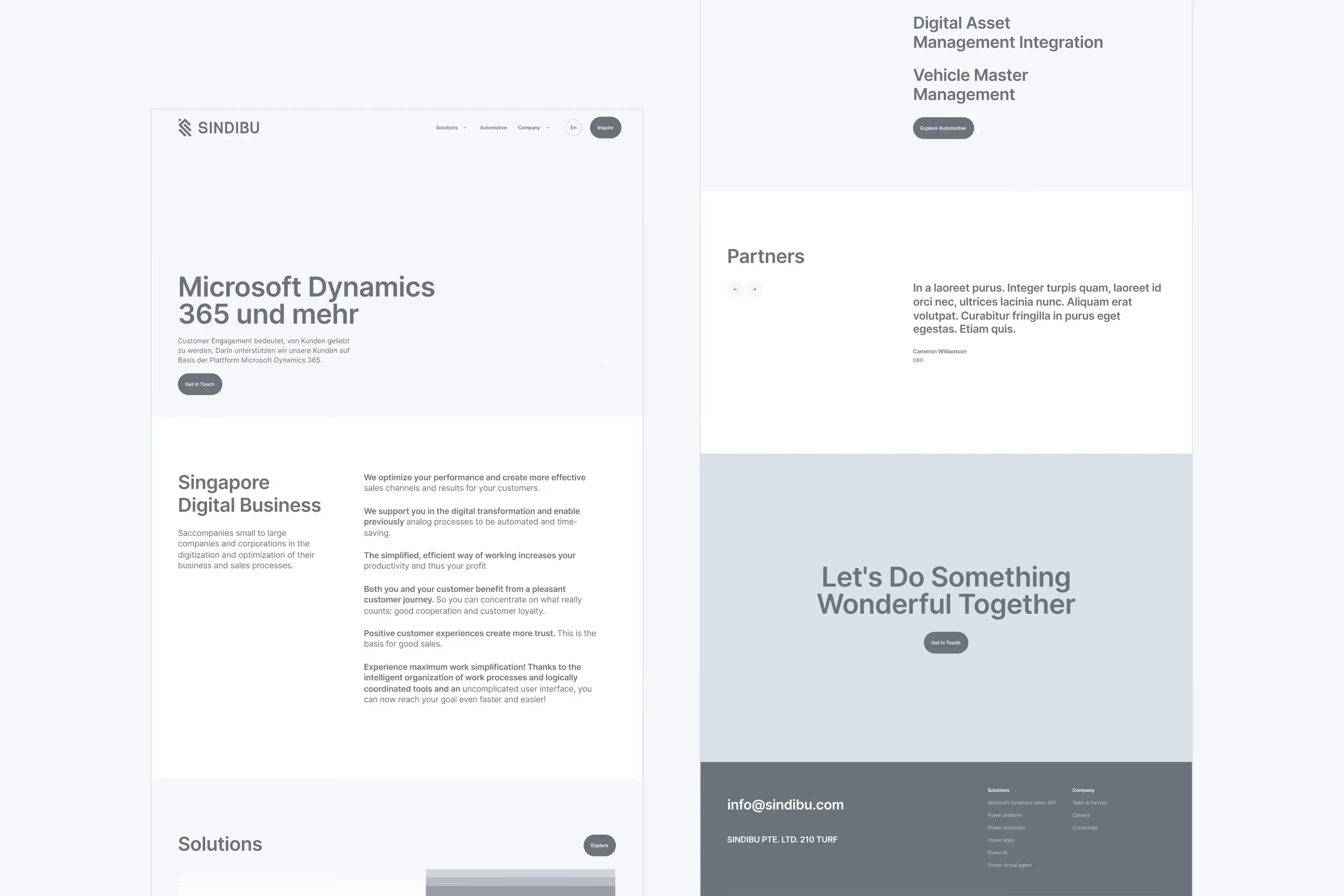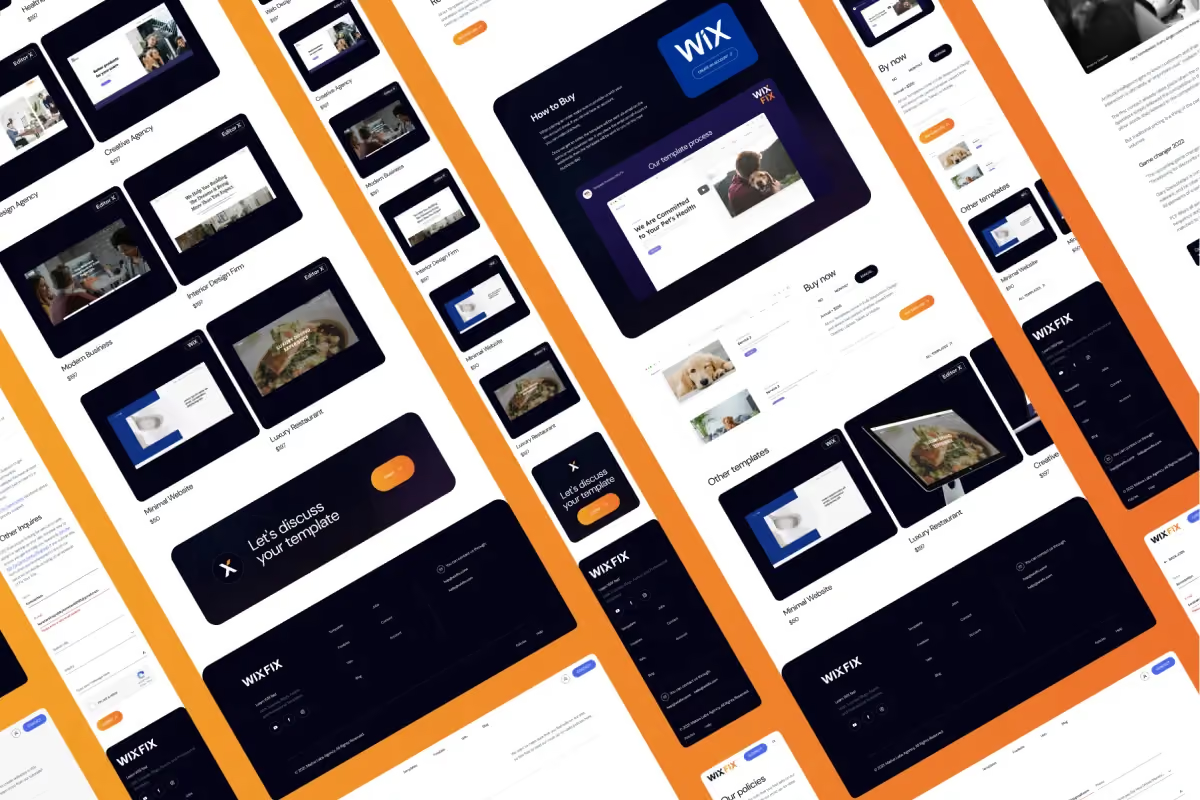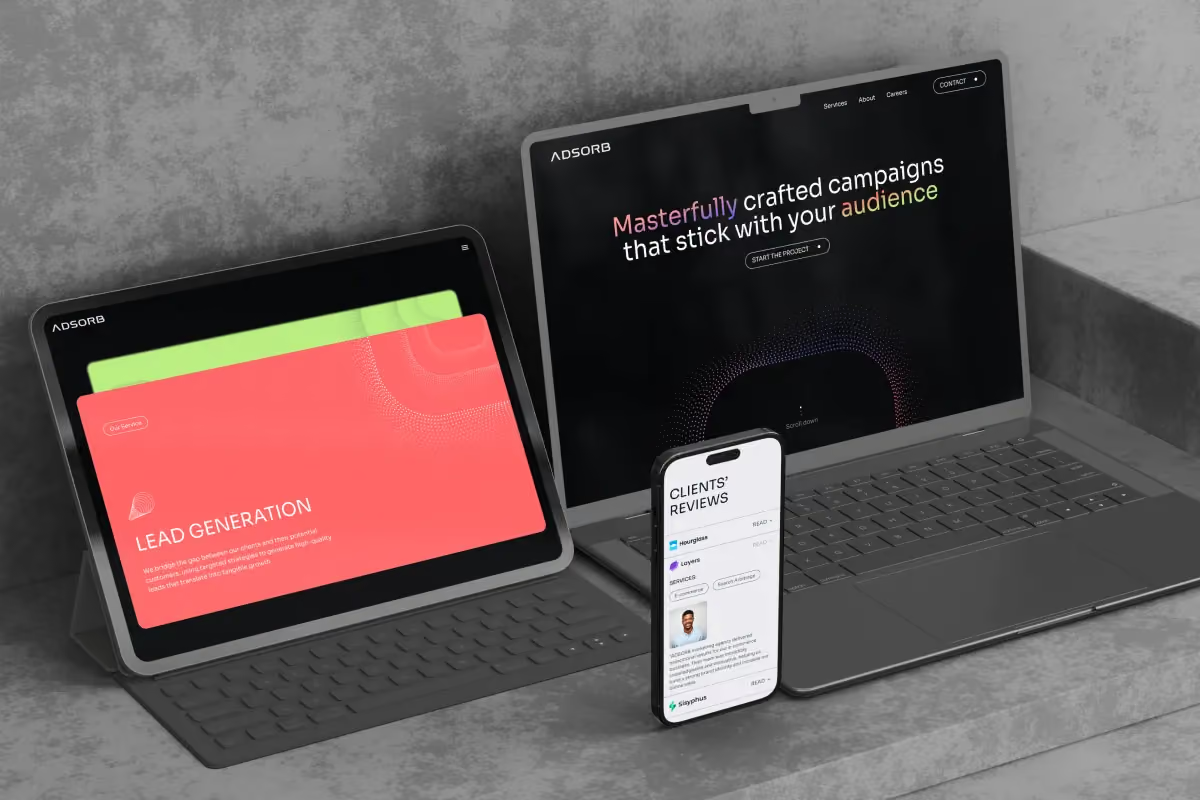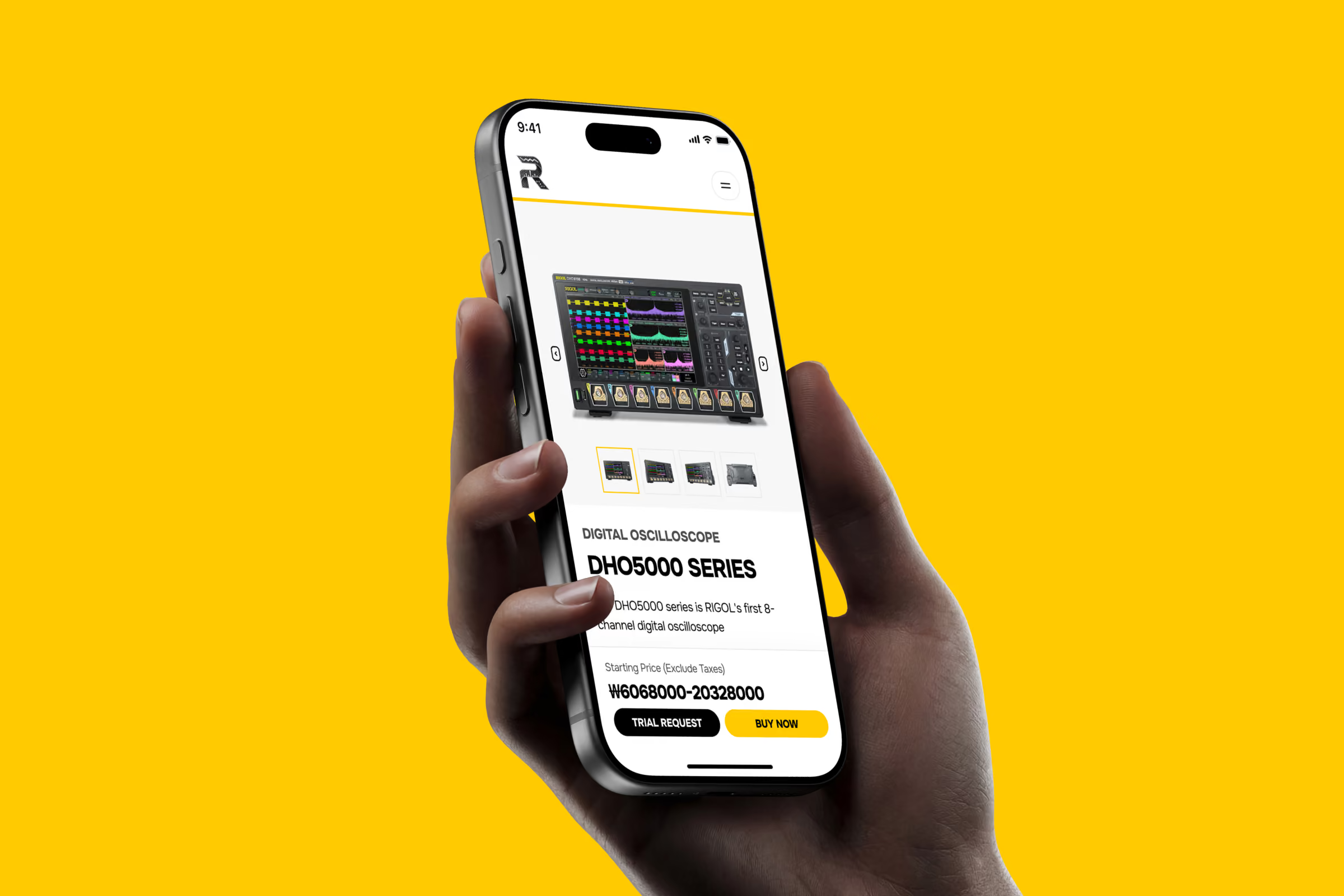
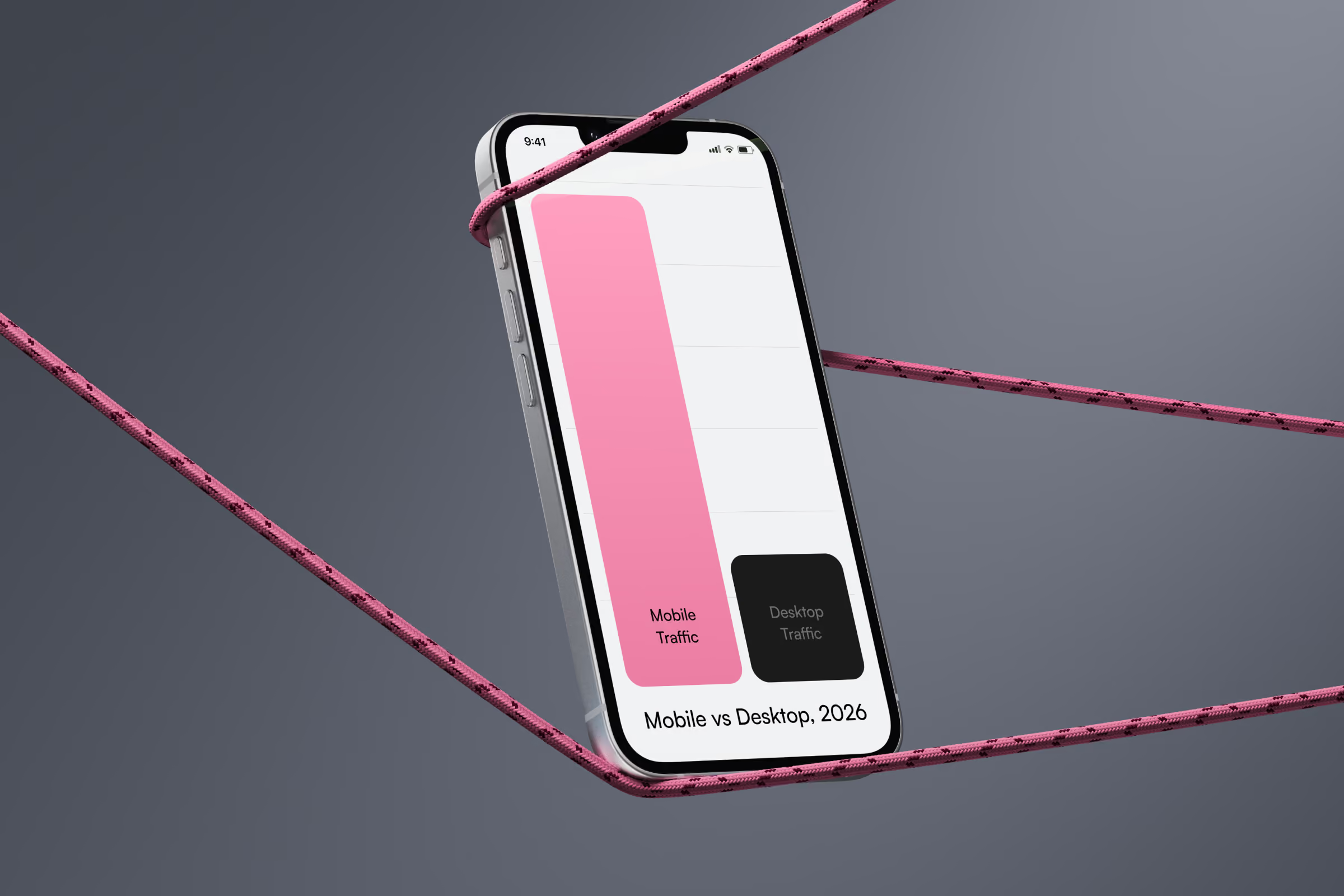
The responsive web design advantages businesses gain today go far beyond aesthetics — they show up directly in revenue. Mobile devices now account for 63% of all global web traffic (Statcounter, 2025). Yet nearly half of small business websites still deliver a desktop-first experience — one that forces mobile visitors to pinch, zoom, and abandon. The question isn't whether your customers browse on mobile. They do. The real question is how much revenue your site is losing right now.
From Desktop Grids to Fluid Layouts: How We Got Here
In 2010, web designers built fixed 960px layouts and called it done. On a desktop monitor, sites looked sharp. On a smartphone, text became unreadable and buttons untappable.
The industry tried two workarounds — both failed.
Separate mobile subdomains (m.example.com) doubled maintenance costs and created duplicate-content penalties in search rankings. Flash-based adaptive sites vanished overnight after Apple blocked Flash on iOS in 2010, making entire business websites invisible to iPhone users.
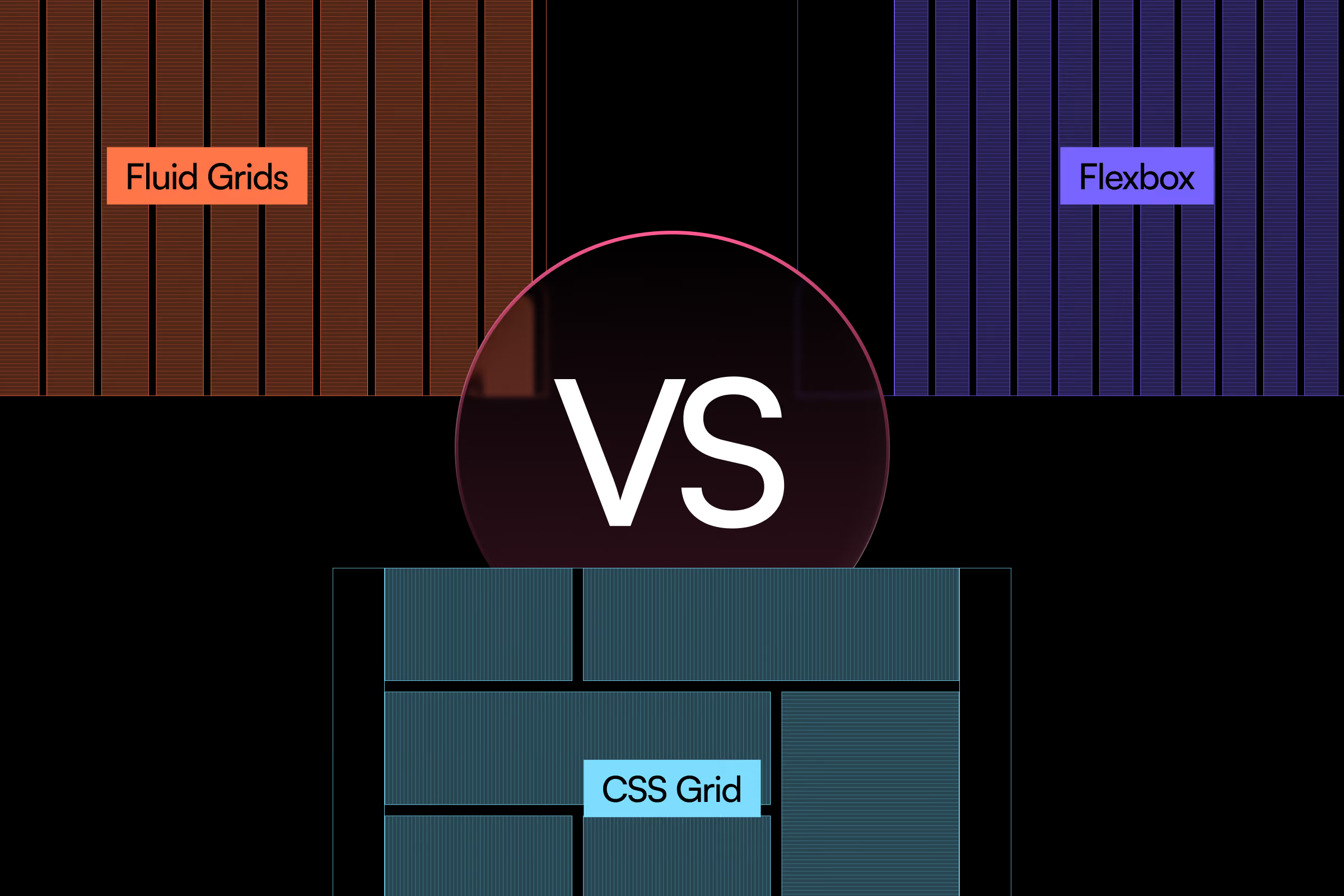
Ethan Marcotte's 2010 piece in A List Apart introduced the fluid grid model: layouts that reflow based on viewport width. By 2021, Google's mobile-first indexing became the default for all new sites. The modern standard was set. The execution, however, still trips up most small businesses.
Mobile-Friendly Website Impact: Does It Actually Move the Revenue Needle?
Yes — and the ROI of mobile responsive web design is specific enough to budget against.
Google's research shows a one-second improvement in mobile loading time correlates with an 8–12% increase in conversions for e-commerce sites. For a business doing $500K/year online, that single technical change translates to $40,000–$60,000 in additional annual revenue.
Here's what that looks like in practice. A mid-sized outdoor gear retailer in Colorado had a mobile bounce rate of 71%. Customers landed on product pages and left within seconds. After a full redesign focused on intuitive navigation and sub-2-second performance, their mobile conversion rate climbed from 0.8% to 2.3% over 90 days. That shift added $180,000 in annual mobile revenue — without increasing the ad budget by a dollar.
{{vad-quote-1}}
Responsive Web Design Benefits: Mobile-First vs. Other Approaches
The table above makes the choice look straightforward. In practice, executing a genuine mobile-first build — one that handles device fragmentation, maintains thumb-friendly navigation across breakpoints, and scores well on INP without sacrificing desktop layout — requires a level of technical SEO and UX architecture that most in-house teams haven't had to do before. That's the gap that professional responsive web design services are built to close: translating the mobile-first framework into a site that actually performs under real-world conditions.
Why Responsive Design Is Necessary: Three Ways Businesses Quietly Lose Mobile Revenue
- Treating "mobile-friendly" as a checkbox. A theme labeled responsive in any marketplace doesn't guarantee strong performance. Many owners install it, confirm nothing breaks on their iPhone, and move on. What they miss: a layout can reflow correctly and still load 6MB of images, fire 80 JavaScript requests, and take 7 seconds to become interactive. According to the HTTP Archive's 2025 Web Almanac, the median mobile page weight is now 2.6MB — yet the optimal threshold for strong conversion sits under 1MB. The site renders. It just renders too slowly to keep anyone around.
- Optimizing for the screen they use, not the screen their customers use. Analytics dashboards default to desktop views because marketers access them from laptops. This creates a persistent blind spot. When the majority of customers browse on mobile, focusing design energy on the desktop experience is like coaching the understudies while the lead actors struggle on stage. Filter your GA4 data by device category before your next design review. The bounce gap between desktop and mobile on the same site typically reflects a 2–3× conversion difference. That gap is the opportunity.
- Ignoring Core Web Vitals until a ranking drop forces action. Google's Core Web Vitals — LCP, CLS, and INP — directly influence search rankings and are measured separately for mobile and desktop. A site can pass desktop thresholds and silently fail on mobile for months, bleeding organic marketing traffic. By the time the drop appears in Search Console, the compounding damage is already done.
Signal & Noise: Five Numbers Worth Knowing
- A 100ms delay in mobile response time reduces conversion by 7% — Akamai
- Mobile-first indexed sites rank 22% higher on average for high-intent local queries — BrightLocal, 2025
- Touch targets smaller than 48×48px increase tap errors by 3.4× — Google Material Design research
- Sites with poor CLS scores (above 0.25) see a 24% higher bounce-rate on mobile — Cloudflare Web Analytics, 2024
- Cutting mobile page weight from 3MB to under 1MB correlates with a 16% reduction in bounce — HTTP Archive
The Strongest Argument Against Mobile-First (And When It's Valid)
The most credible pushback: some B2B audiences are predominantly desktop users. If your customers are procurement managers configuring enterprise software at 9am on a company laptop, the importance of responsive web design for mobile may rank lower on your priority list.
That's a fair point — for a narrow segment. But understanding why we need responsive web design becomes unavoidable the moment you look at paid social: over 90% of Facebook and Instagram ad clicks land on mobile (Meta, 2025). Paying for lead-generation traffic that your site then fails to convert is expensive by definition. The business benefits of responsive design — lower bounce-rate, stronger customer retention, better conversion — hold for most SMBs in retail, hospitality, local services, and e-commerce.
What Is the Importance of Responsive Web Design for Your Bottom Line?
- Open Google Search Console → Core Web Vitals report → switch to Mobile view. This surfaces exactly what Google measures — free, takes five minutes.
- Run your top five revenue pages through PageSpeed Insights (pagespeed.web.dev) on the mobile tab. Target LCP under 2.5s and INP under 200ms to strengthen loading performance across all devices.
- Complete your core user journey — product page to checkout, or contact form to confirmation — on a real phone with WiFi off. What you find will be instructive.
{{mike-quote-1}}
The responsive web design ROI isn't a design philosophy — it's a revenue calculation. The impact on your bottom line comes from one place: the gap between the mobile traffic already hitting your site and the share of it you're actually converting. Closing that gap is what responsive web design is for.
The audit steps above will show you exactly where the gaps are. What to do with that data — restructuring fluid grids, tightening viewport configuration, improving page speed to meet Core Web Vitals thresholds — is a separate question. For teams that want to move from diagnosis to results without rebuilding the entire site blind, professional responsive web design services provide the technical foundation: optimized media queries, accessibility compliance, and conversion rate improvements measured against your actual traffic, not industry averages.


.avif)