


Presentation design services
We build presentations for companies where communication drives business outcomes—investor pitch deck projects that close funding rounds, sales decks that convert qualified leads, executive briefings that move board decisions forward. This isn't about making slides look polished. It's about structuring complex information so your audience understands, believes, and acts on what you're presenting.

Professional Slide Design Services for High-Stakes Communication
We treat every presentation as a communication system, not a collection of slides. Our presentation development services process starts with message architecture—clarifying what needs to be said and in what order—before any visual work begins.
Message structure and narrative flow that matches how your audience makes decisions
Custom illustrations, infographic elements, and data visualizations that surface insights instead of overwhelming with numbers
Visual hierarchy systems that guide attention to what matters most on each slide
Template frameworks your team can use without losing consistency
Speaker notes and delivery guidance for conference presentations and board meetings
Training sessions so your team maintains design standards independently
Designs Worth Remembering
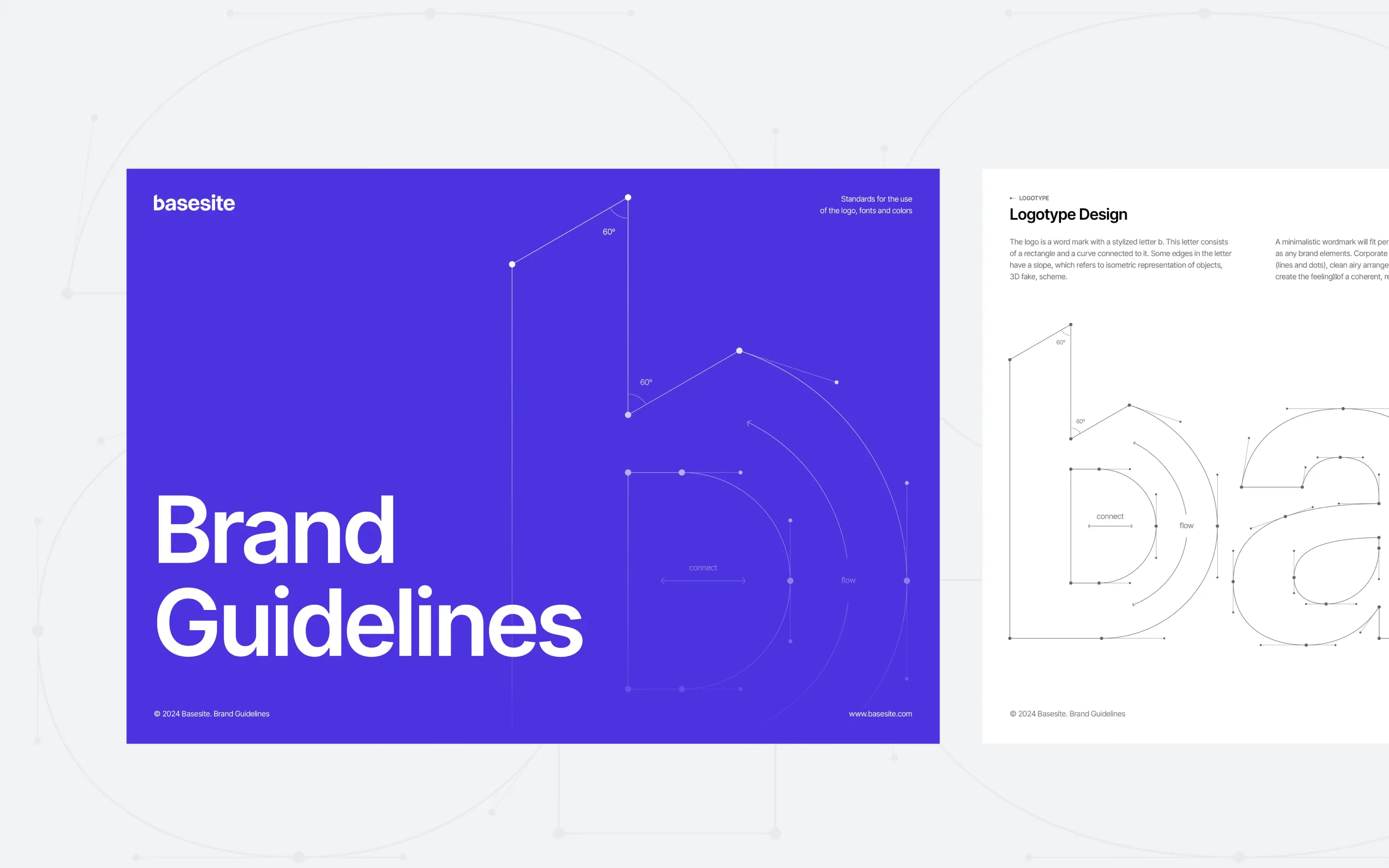
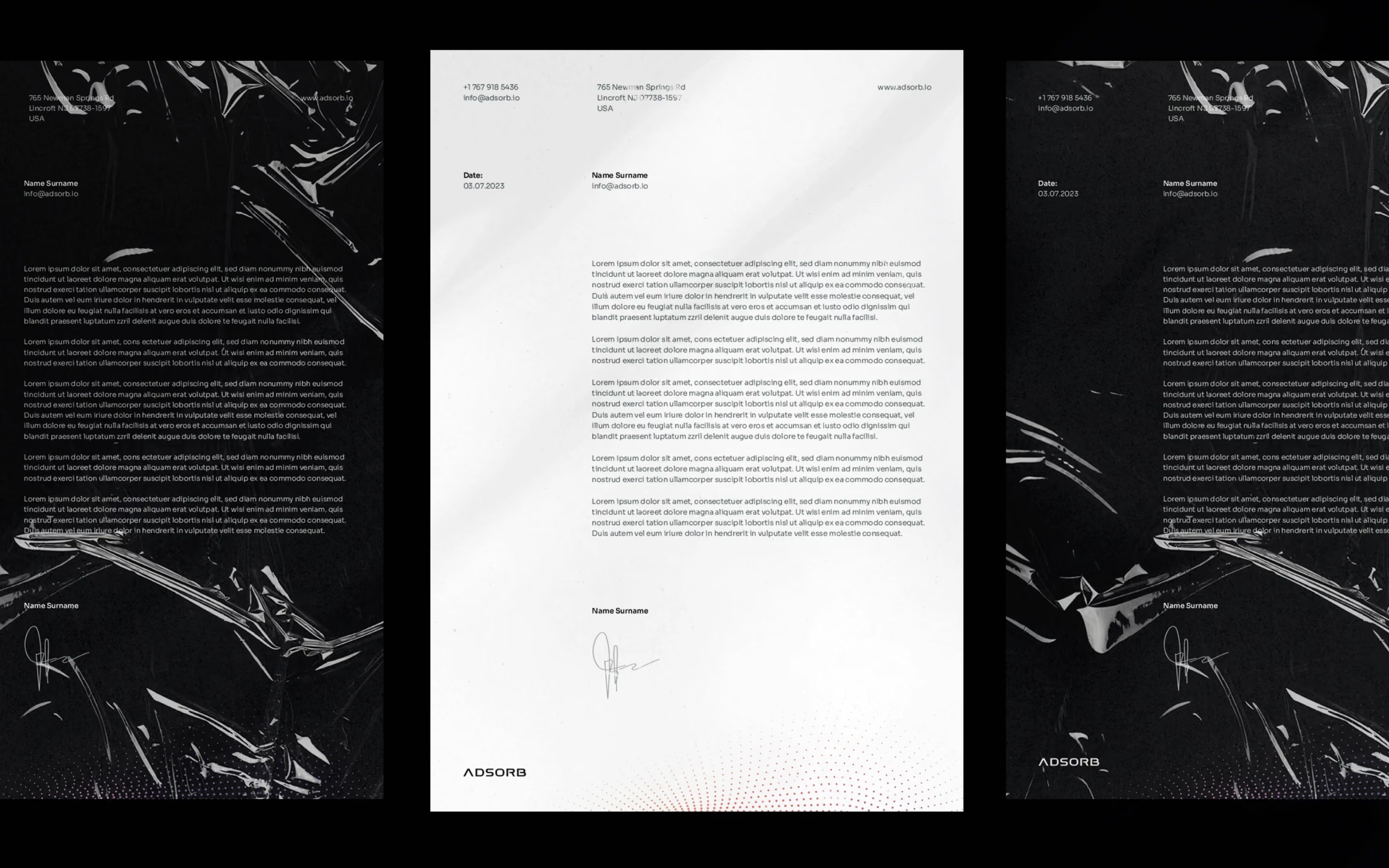
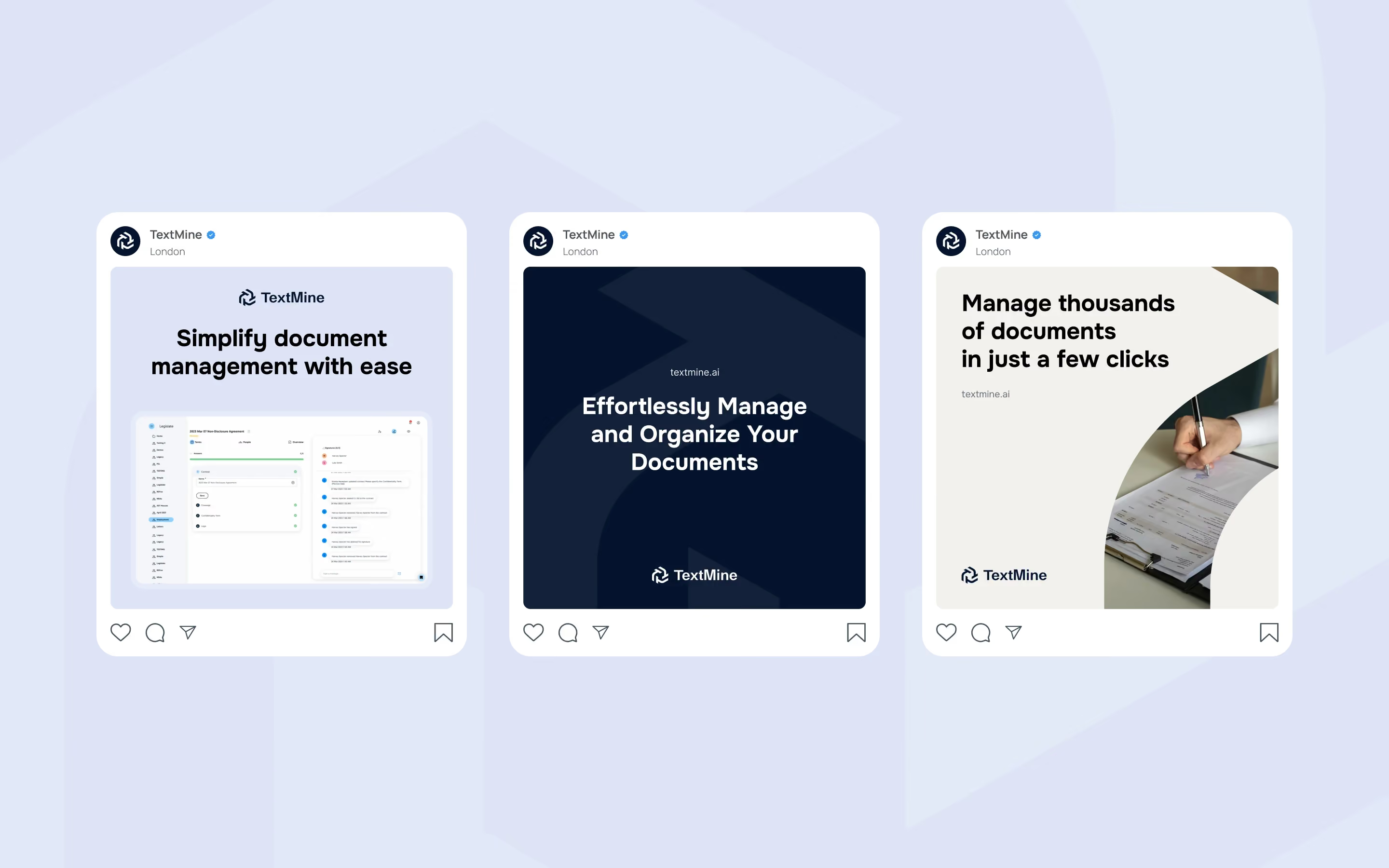
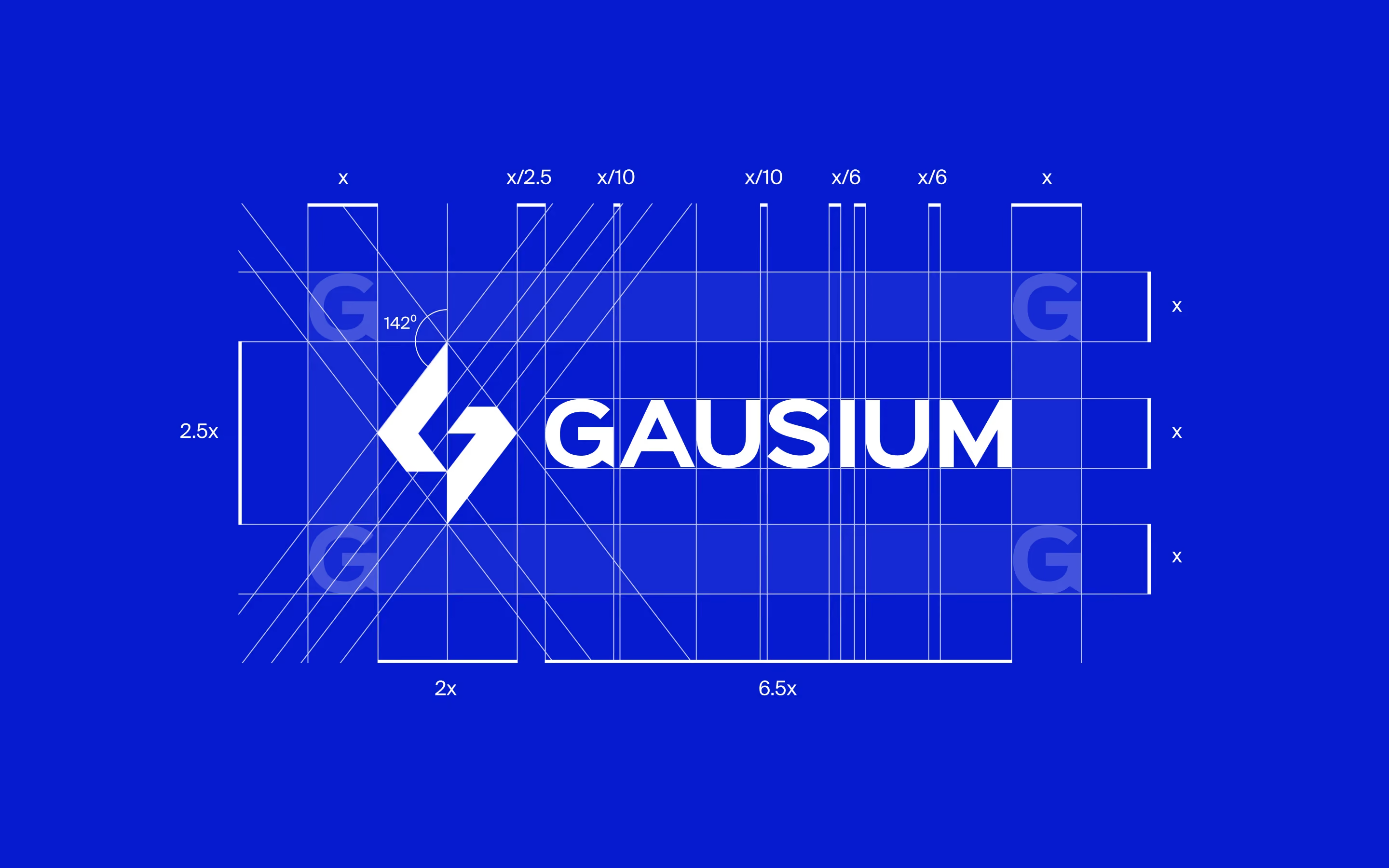
A curated mix of visuals that speak louder than words — bold, refined, and uniquely crafted.


Corporate Presentation Development for Enterprise Clients
We work with enterprise teams where presentation quality directly impacts revenue, funding, or strategic decisions. Most of our clients fall into four categories, each with specific communication challenges.
01
Startup founders raising capital
You need to explain market opportunity, product differentiation, and traction metrics to investors who see 50 pitches a month. Your investor pitch deck has 12 minutes to convince them your business model works before they move to questions. We structure pitch narratives that lead with the strongest proof points and layer complexity strategically. One biotech client we worked with was getting "interesting, but not ready" feedback from VCs. We restructured their 28-slide deck into 14 slides that frontloaded clinical trial results instead of burying them in the appendix. They closed their Series A two months later.
02
B2B sales teams managing complex deals
Your prospects need to understand technical capabilities, integration requirements, and ROI projections—but they're evaluating three other vendors simultaneously. Generic "our solution" slides don't differentiate. We build sales decks with modular structure: a tight 15-slide core story, plus role-specific sections (IT, finance, operations) you pull in based on who's in the room.
03
Executive leadership presenting to boards
These presentations get analyzed line by line. Every data point needs sourcing, every recommendation needs risk assessment, and the entire narrative needs to support a clear ask. We help executives build quarterly business reviews and strategic planning decks where the logic is airtight and the visual execution signals credibility.
04
Product and marketing teams launching new offerings
You're introducing something the market hasn't seen before, which means your presentation needs to educate before it persuades. We design product launch decks that establish context, demonstrate differentiation, and provide sales teams with messaging they can adapt to different buyer personas.
Meet the Team Behind the Work
Each of us contributes our own perspective, skills, and dedication to deliver thoughtful, high-quality digital solutions for our clients around the world.
Pavel S

Vad S.

Mike V.

Dmitry M.

Maxim N.

Vladimir M.

Vlad B.

Ivan P.

David Z.

Danil K.

Eugene V.

Roman V.

Vlad H.

Pavel S.
PowerPoint Design Firm Approach to Structure and Clarity
01
Discovery and message audit
First week is spent understanding your audience's decision criteria, your competitive positioning, and what specific action you need them to take. We analyze any existing presentations to identify where message clarity breaks down. This determines everything that follows.
02
Information architecture and flow
Before touching visual design, we map out slide sequence, information hierarchy within each slide, and narrative pacing. Where should charts and graphs appear? Which points need proof? How do we layer technical detail so non-technical stakeholders stay engaged? A SaaS company came to us with a 60-slide sales deck their team described as "comprehensive." The real problem: prospects couldn't identify the core value proposition because it was scattered across 12 different slides. We consolidated their pitch into 22 slides with a clear three-part structure: problem cost, solution mechanics, customer validation.
03
Visual system design and execution
Only after the message structure is solid do we design. We're not creating one-off slides—we're building design systems with defined typography hierarchies, color logic for different content types, iconography standards, and data visualization templates. You get both the final presentation and the underlying system your team can replicate.
Get Started
Let’s Build the Perfect Solution for Your Business

Other Services
We Offer







What Undermines Most Business Presentations
Here's the pattern we see constantly: someone needs to present, so they open the last relevant PPT file, copy slides that seem useful, add new content wherever it fits, and layer in stock imagery to "make it visual." The result feels scattered because it is—there's no underlying logic connecting slide 8 to slide 9, no clear reason why certain information appears early versus late.
The core issue is trying to include everything instead of selecting what matters. A VP of Sales recently showed us their "complete" product presentation: 73 slides covering every feature, integration, case study, and technical specification. Their reasoning: "If we don't include it, they might ask and we won't have it ready." But here's what actually happened in their demos—prospects tuned out by slide 15 and started checking phones. By trying to cover everything, they communicated nothing memorably. We rebuilt it as 18 slides focused on the three capabilities that differentiated them from competitors, with additional detail accessible on request. Their demo-to-trial conversion rate jumped from 8% to 19% over the next quarter.
Investor pitch deck projects fail differently. Founders often structure decks chronologically—our origin story, then product evolution, then current traction, then market analysis, then team bios, then financial projections. This feels logical when you're building the deck, but investors don't think chronologically. They think in risk categories: market risk, product risk, execution risk, competition risk. A chronological deck forces them to hunt for answers to their actual questions. Better structure: lead with traction that proves product-market fit, then explain why this market opportunity is massive, then show why your team can execute at scale.
Fast-Turnaround Slide Design Agency for Time-Sensitive Projects
We take on 4-5 projects simultaneously because each requires focused attention over 2-4 weeks depending on complexity. For clients with urgent timelines or immediate deadlines—such as conference keynotes or webinar launches scheduled within days—we offer fast turnaround options through our specialized slide design agency team. However, these urgent projects require clear existing content and defined message structure. Our professional process requires multiple feedback cycles and collaborative refinement—shortcuts produce mediocre results.
We also don't work well with clients who want to hand off a Word document and receive a completed deck without being involved in shaping the message. Our best outcomes happen when you bring domain expertise and business context while we bring communication structure and visual execution. If you're not available for working sessions, the project stalls.
Additionally, if your need is ongoing production support—updating slides weekly, creating small variations for different audiences, maintaining existing templates—you'd benefit more from a dedicated creation agency partner or internal designer. We specialize in building the system and training your team to use it autonomously, not serving as your permanent slide design production team.
When Structure Drives Measurable Business Impact
The difference between decoration and strategic design shows up in outcomes. We worked with a B2B SaaS company whose sales team was closing 12% of qualified demos. The product was strong, pricing was competitive, but something in the pitch wasn't landing. As a PowerPoint presentation design agency, we audited their presentation and found 47 slides with value propositions mentioned on slide 23, customer proof points dumped in an appendix, and technical specifications mixed randomly with business benefits.
We restructured it: 18 core slides, value prop established by slide 3, customer validation integrated throughout as proof for each major claim instead of isolated at the end. Three months after rollout, their close rate reached 24%. Same product, same pricing, same sales team. The only variable that changed was how clearly they communicated value.
If your presentations need to do more than look professional—if they need to change minds, close deals, or secure funding—we should discuss your project.