


Pitch Deck Design Agency
We're a pitch deck design agency that builds fundraising presentations for founders raising capital — not slide templates, but strategic instruments that frame how investors evaluate your business. This means narrative architecture, financial logic, and visual systems built to withstand due diligence scrutiny. We work with 3-4 clients per quarter because each project requires full immersion into your business model, competitive positioning, and funding thesis.

What professional pitch deck designers build in practice
A fundraising deck is an argument structured to preempt investor objections before they surface. We architect your story to answer the pattern-matching questions VCs run through automatically: TAM validation methodology, unit economics that survive stress-testing, competitive moats that acknowledge incumbent advantages, team composition that matches execution requirements.
Narrative sequencing based on investor psychology research
Financial modeling with cohort analysis and CAC payback integration
Competitive landscape mapping without strategic blind spots
Visual hierarchy designed for comprehension under time pressure
Appendix architecture for technical due diligence depth
Presentation flow calibrated to fund-returning outcome scenarios
Designs Worth Remembering
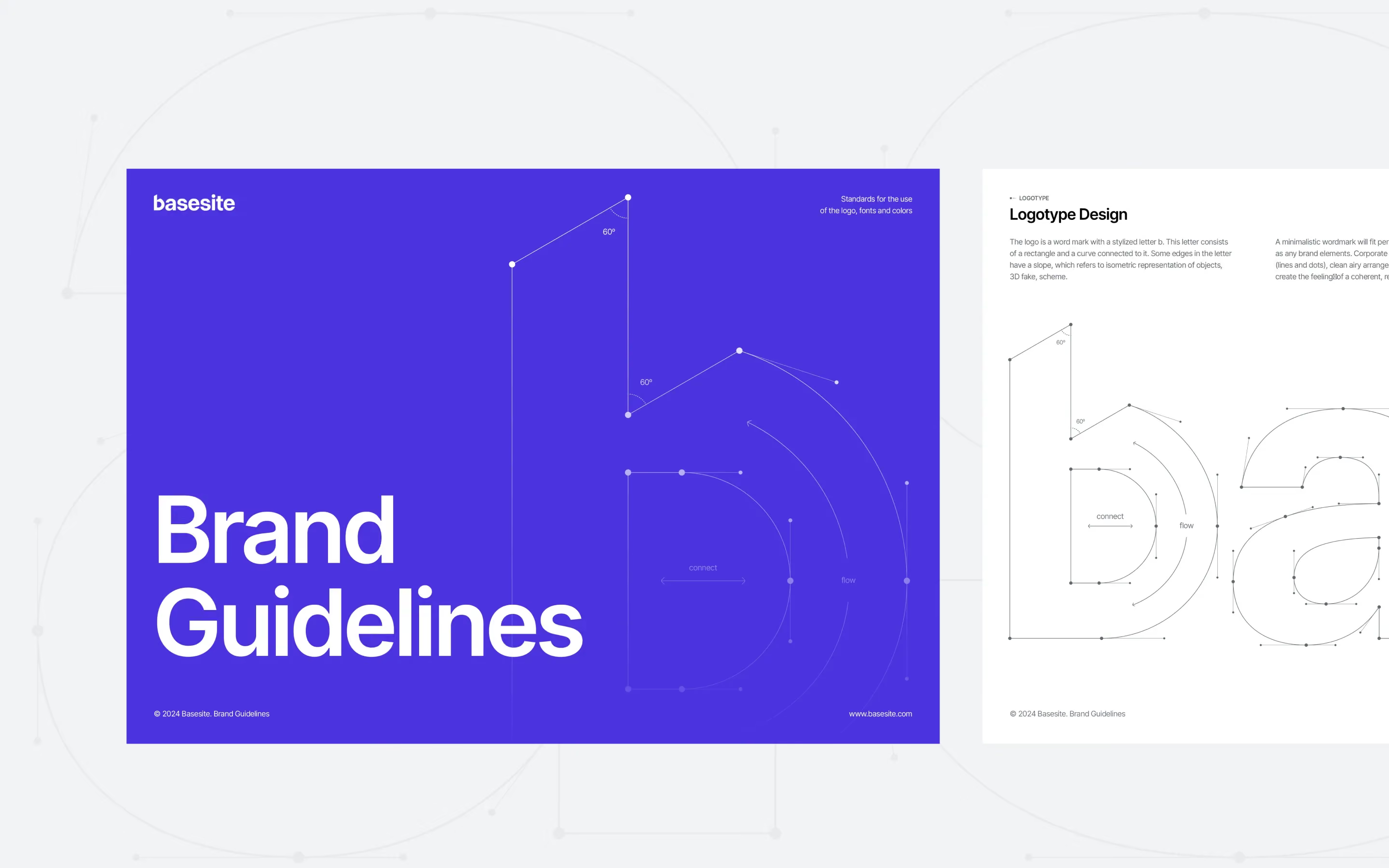
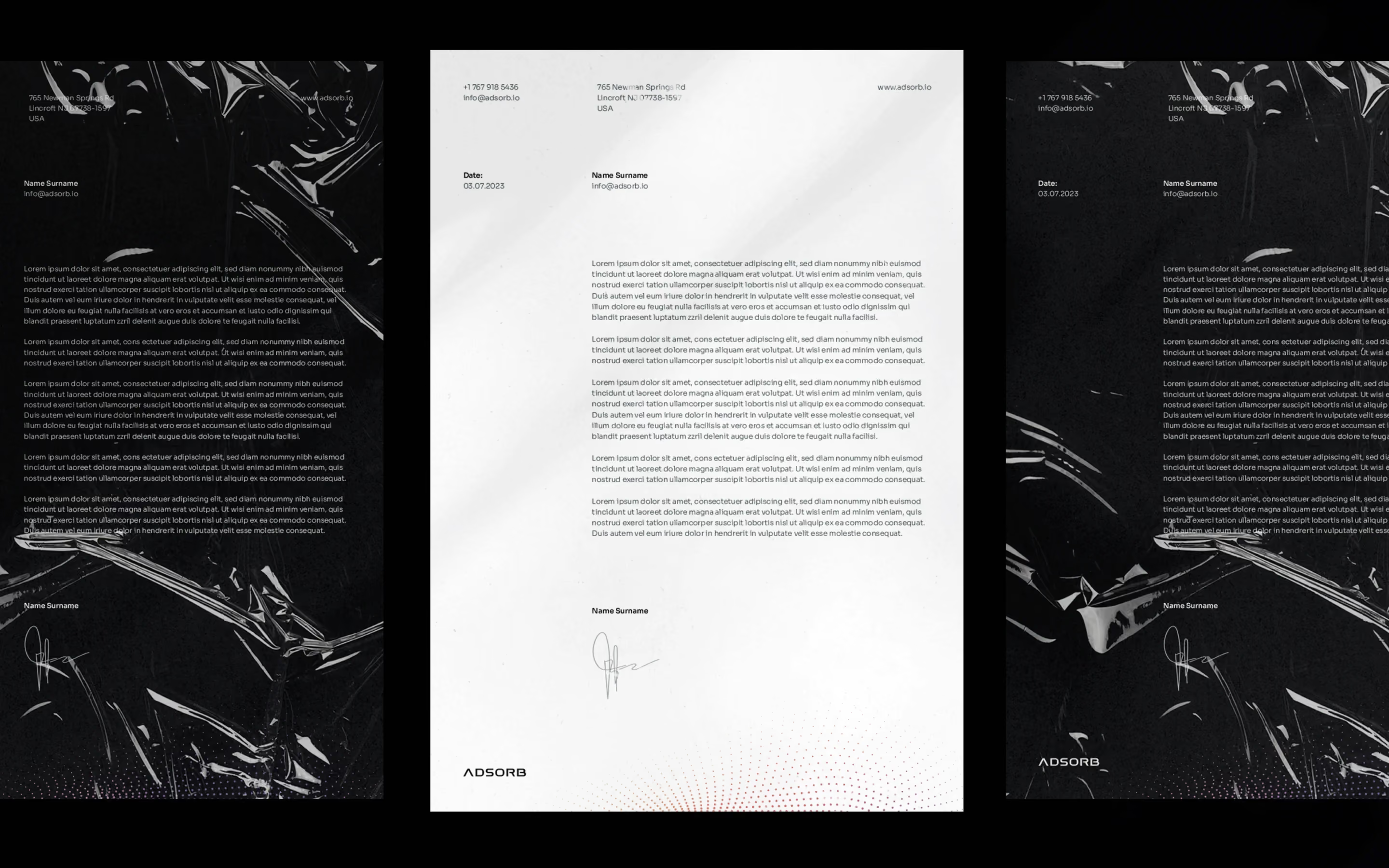
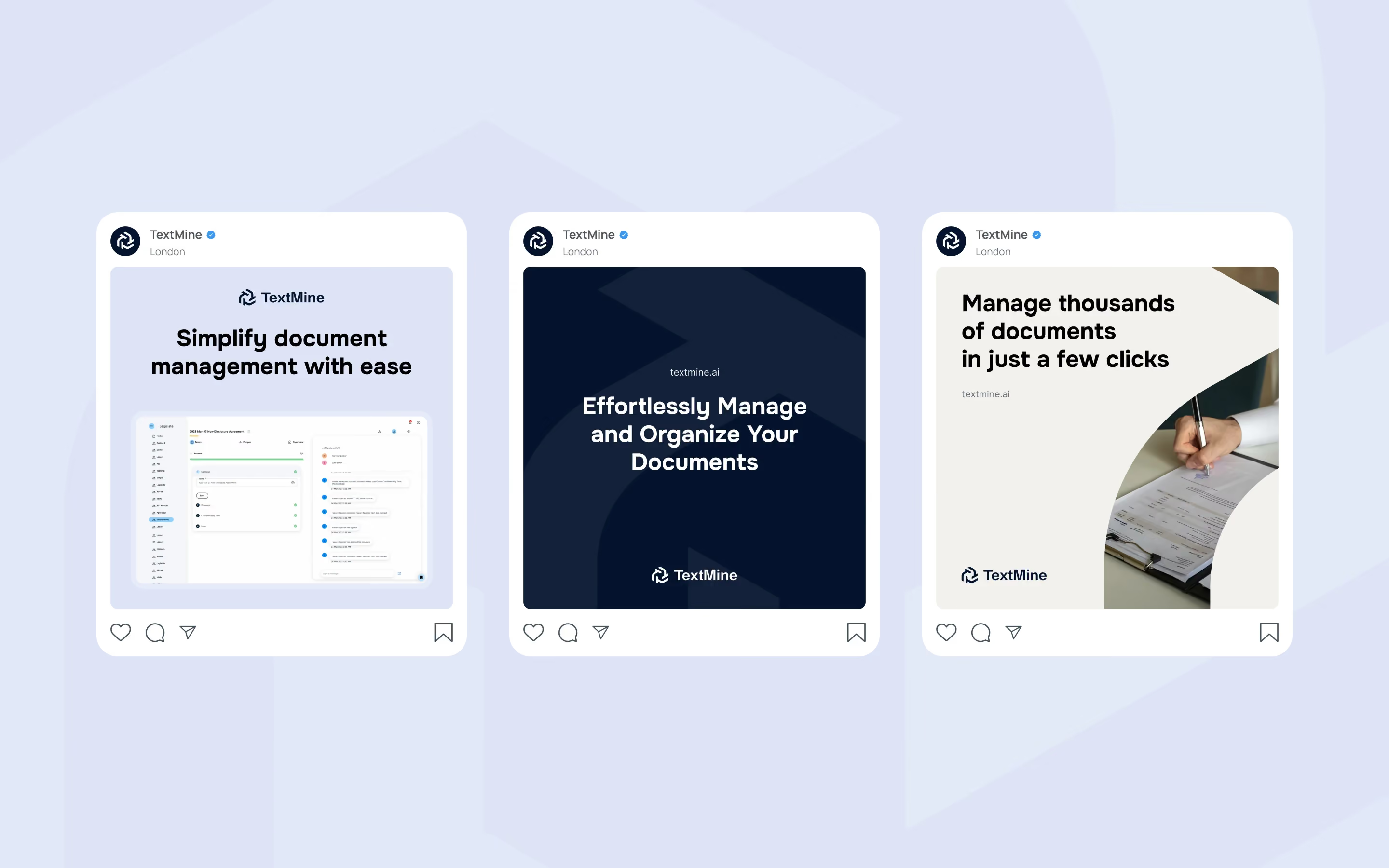
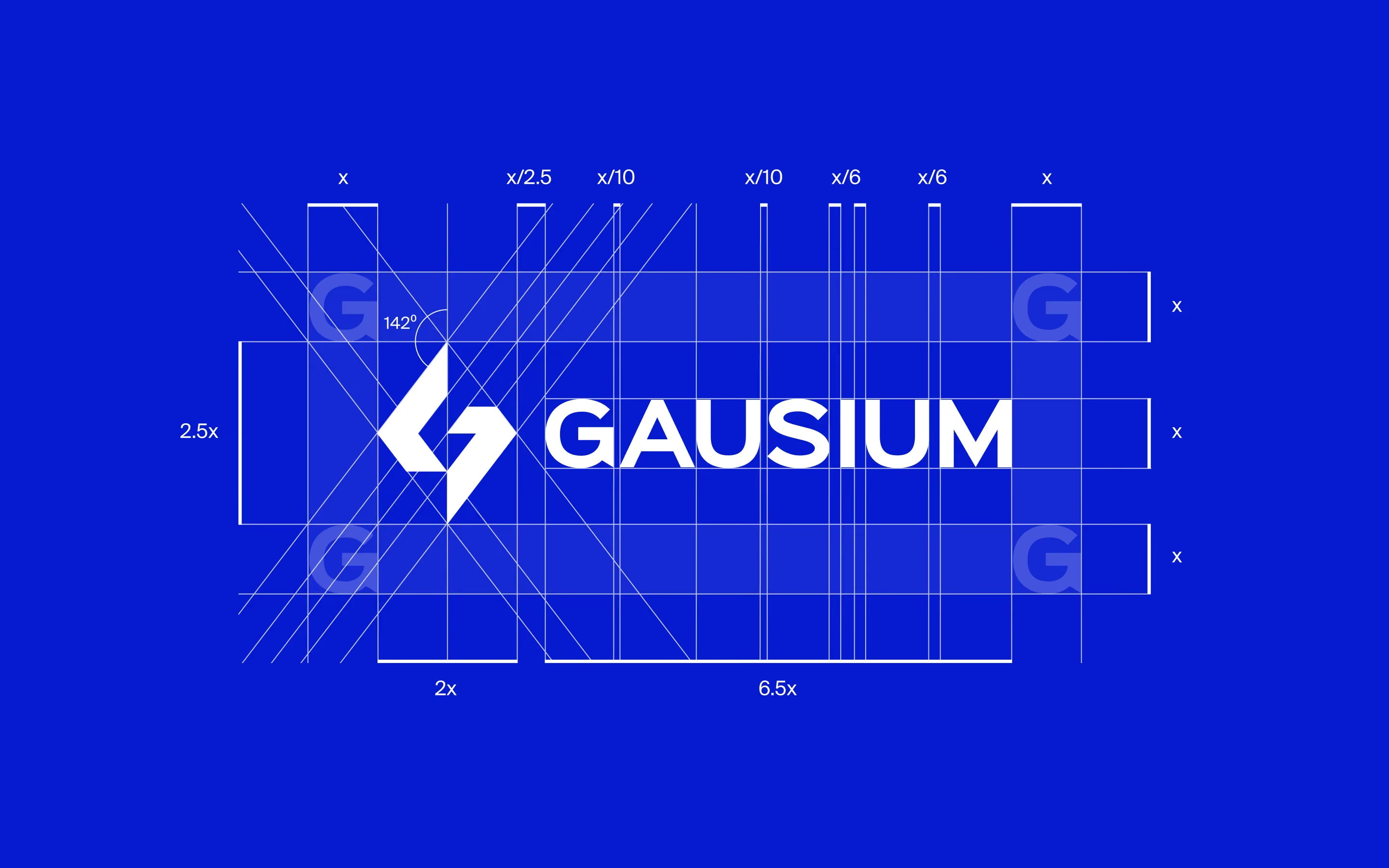
A curated mix of visuals that speak louder than words — bold, refined, and uniquely crafted.


How our pitch deck design firm collaborates with founding teams
We don't accept decks for redesign. We deconstruct your business fundamentals first — revenue mechanics, market structure, competitive dynamics — then build the presentation from strategic foundations up. Expect 10-15 hours of discovery calls, financial model audits, and positioning iterations before visual design begins.
01
Business model interrogation
We dissect your P&L assumptions, customer acquisition channels, churn patterns, and margin evolution trajectory. Claims require evidence. Pre-revenue projections need defensible assumption chains we can trace backward.
02
Objection forecasting and neutralization
Every assertion in your deck will face investor skepticism trained on thousands of pitches. We stress-test vulnerable areas: TAM calculations that ignore addressable market constraints, competitive analyses that underweight distribution advantages, unit economics that mask negative contribution margins during scaling phases.
03
Stage-appropriate structural customization
Seed decks for angel syndicates differ fundamentally from Series A materials for institutional funds. We adjust analytical depth, risk acknowledgment, and data granularity based on your funding stage and target investor sophistication level.
04
Delivery mechanics and objection handling
The deck functions both as leave-behind documentation and live presentation tool. We train founders on pacing rhythm, transition bridges between sections, and real-time objection responses that reinforce rather than undermine your thesis.
Meet the Team Behind the Work
Each of us contributes our own perspective, skills, and dedication to deliver thoughtful, high-quality digital solutions for our clients around the world.
Pavel S

Vad S.

Mike V.

Dmitry M.

Maxim N.

Vladimir M.

Vlad B.

Ivan P.

David Z.

Danil K.

Eugene V.

Roman V.

Vlad H.

Pavel S.
Presentation deck design services: the clients we work with
01
Traction-stage companies preparing for institutional rounds
Pre-seed through Series B, where you have shipped product, acquired users, or generated revenue. Real market feedback, not projected interest. We've worked with B2B SaaS founders who had 40+ customer conversations but struggled to translate product-market fit signals into investor-legible traction metrics. Result: deck structure that presented qualitative validation alongside quantitative early indicators, leading to oversubscribed seed rounds.
02
Technical founders translating product depth into investment narrative
Engineers and scientists with genuine innovation who haven't yet framed technical advantages as investor-comprehensible competitive moats and market capture strategies. One deep-tech hardware client had breakthrough IP but opened their deck with manufacturing specifications. We restructured to lead with market pain severity and TAM, then introduced technology as the enabler. Their close rate on first meetings increased from 12% to 61%.
03
Teams graduating from informal to institutional capital
Companies moving from angel checks and SAFEs to priced equity rounds, where presentation standards and analytical rigor requirements increase materially. These founders often underestimate how institutional investors evaluate risk differently than angels who bet on relationships and founder credibility alone.
Get Started
Let’s Build the Perfect Solution for Your Business

Other Services
We Offer







Where most pitch decks break down before design ever matters
Pitch failures typically originate in strategic construction, not visual execution. Opening with product functionality before establishing market opportunity loses investor attention during the critical first 180 seconds. VCs evaluate through portfolio math: can this return the fund? Leading with feature lists instead of market structure signals misunderstanding of how investment decisions actually get made. By slide three, you're already pattern-matched as tactically focused rather than strategically aware. Consequence: even strong businesses get deprioritized because the framing suggested limited upside potential.
Competitive slides that dismiss incumbents as obviously beatable reveal dangerous naivety. Experienced investors know established players have distribution networks, data advantages, capital reserves, and institutional relationships that new entrants must overcome.
When founders wave away these realities with claims of superior product quality, they demonstrate strategic blindness that affects fundability regardless of actual differentiation. This triggers a pattern-match: inexperienced team, likely to underestimate execution challenges. Result: lower valuation terms or passed deals, even when the underlying business has merit.
Financial projections showing growth curves without exposing the operational machinery underneath force investors to reverse-engineer your assumptions.
- What channels drive acquisition?
- What does cohort retention look like month-over-month?
- When do unit economics turn contribution-margin positive?
If your deck requires investors to extract this information through questions rather than presenting it proactively, you've created analytical work they'll often skip by moving to their next meeting. The hidden cost: you lose investors who would have engaged deeply if the business model had been transparently presented from the start.
When a professional slide deck design specialist isn't the right fit
Our methodology requires 5-7 weeks minimum. Pitching in ten days means we can't execute our research-intensive approach without compromising output quality. For compressed timelines, a creative designer working from your existing content structure makes more practical sense. We don't build decks for pre-validation concepts — if you're pre-product with no customer development or technical prototype, the deck isn't your constraint. That budget should fund market validation first.
Some situations need strategy consulting before presentation design. If your core challenge involves positioning uncertainty or undefined business models, strategic work must precede deck development. For technical teams with real traction preparing for institutional fundraising, this is where a pitch deck design company delivers measurable value. We typically begin new projects 6-8 weeks before target pitch timelines, taking 3-4 engagements per quarter to maintain the depth each project requires with skilled execution and attention to infographics that clarify complex data for investor comprehension.