


Catalog Designers
We create product catalogs for small and mid-sized businesses that need their offerings presented with the clarity and polish their brand deserves. This isn't about templates or quick turnarounds. Our catalog designers build strategic sales tools—where layout decisions, information hierarchy, and visual systems work together to move prospects toward purchase. We work with limited clients simultaneously because each project requires deep understanding of what you sell, your customers, and how purchasing decisions actually happen in your market.

What Professional Catalogue Design Actually Includes
Effective catalogue design is equal parts information architecture and visual execution. We map how customers navigate categories, compare options, and locate specifications before we touch layout software.
Taxonomy development based on customer buying patterns, not internal SKU systems
Grid and layout systems that scale from single-item pages to complex comparison spreads
Typography hierarchy that guides readers to key information within three seconds
Image standardization protocols for items photographed under different conditions
Specification templates that present technical data without cognitive overload
Print production setup including color management, bleed specifications, and binding requirements
Designs Worth Remembering
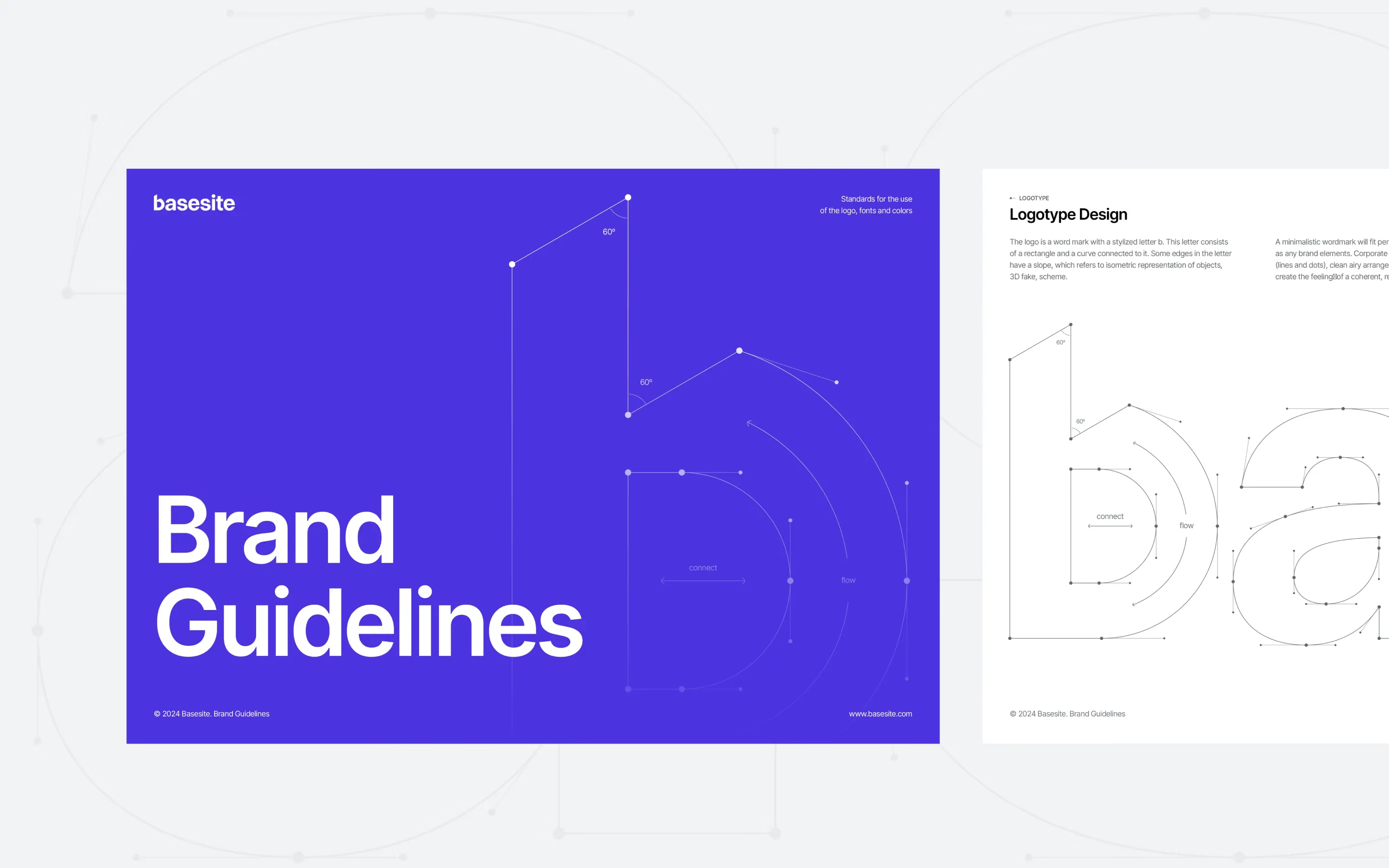
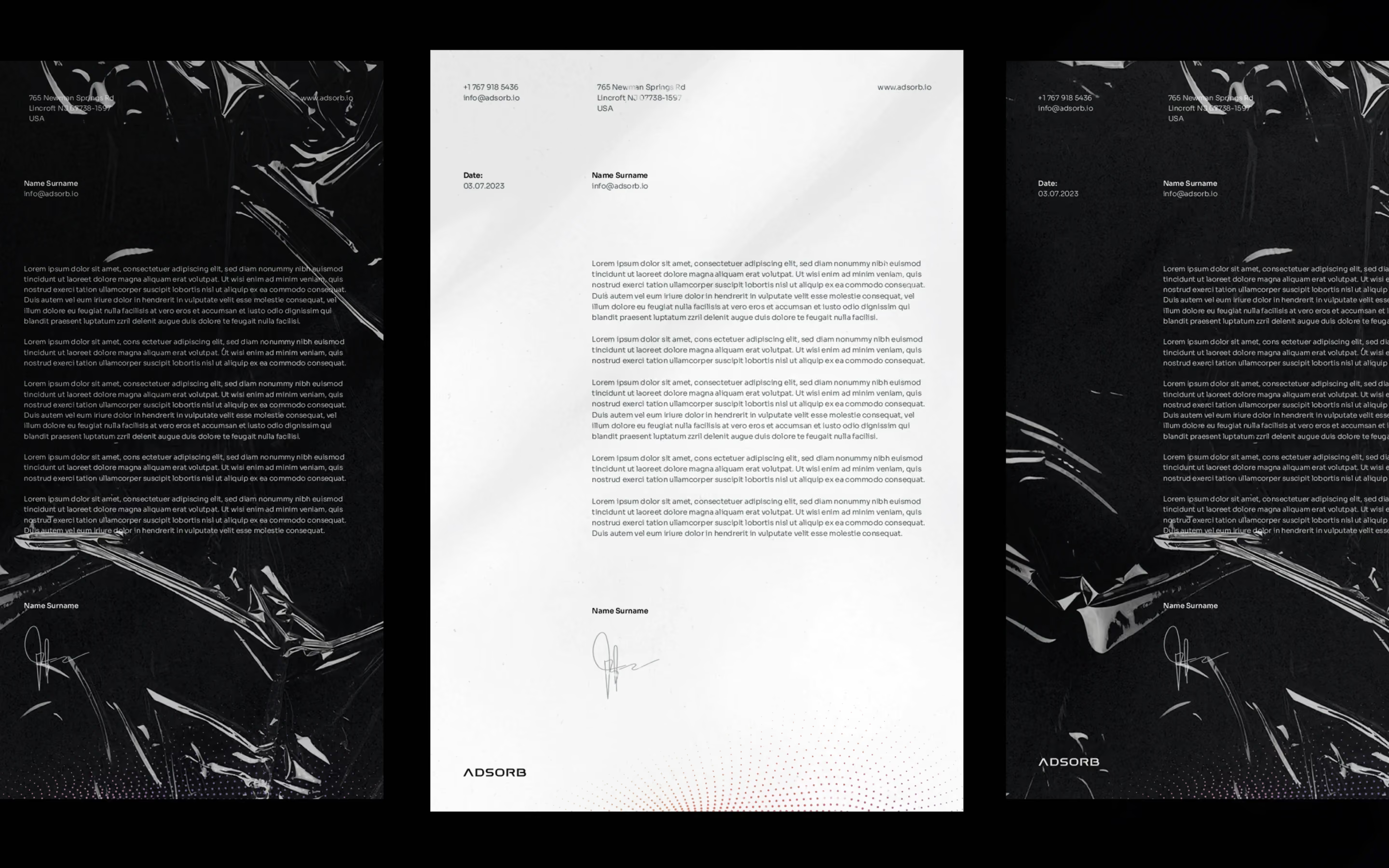
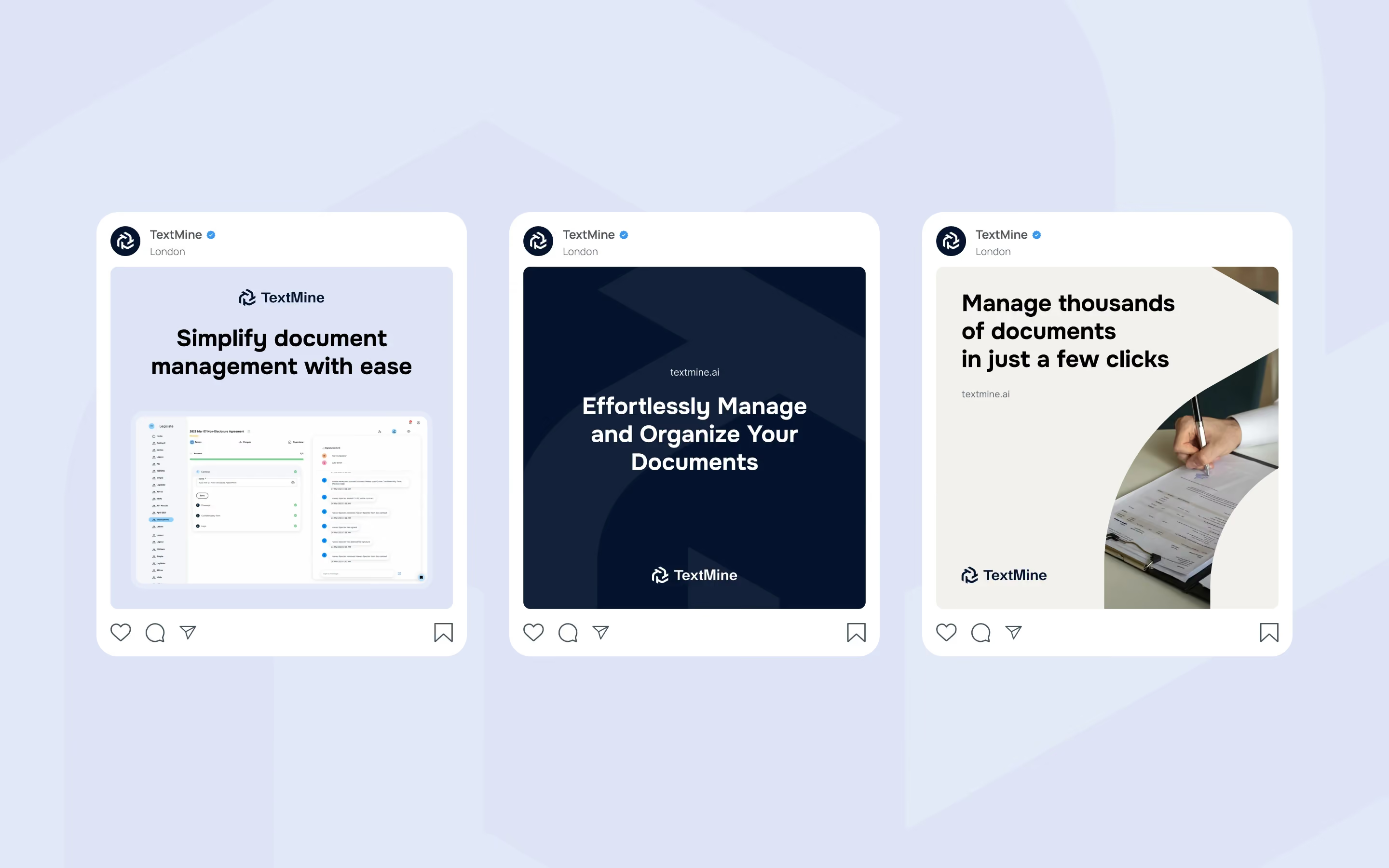
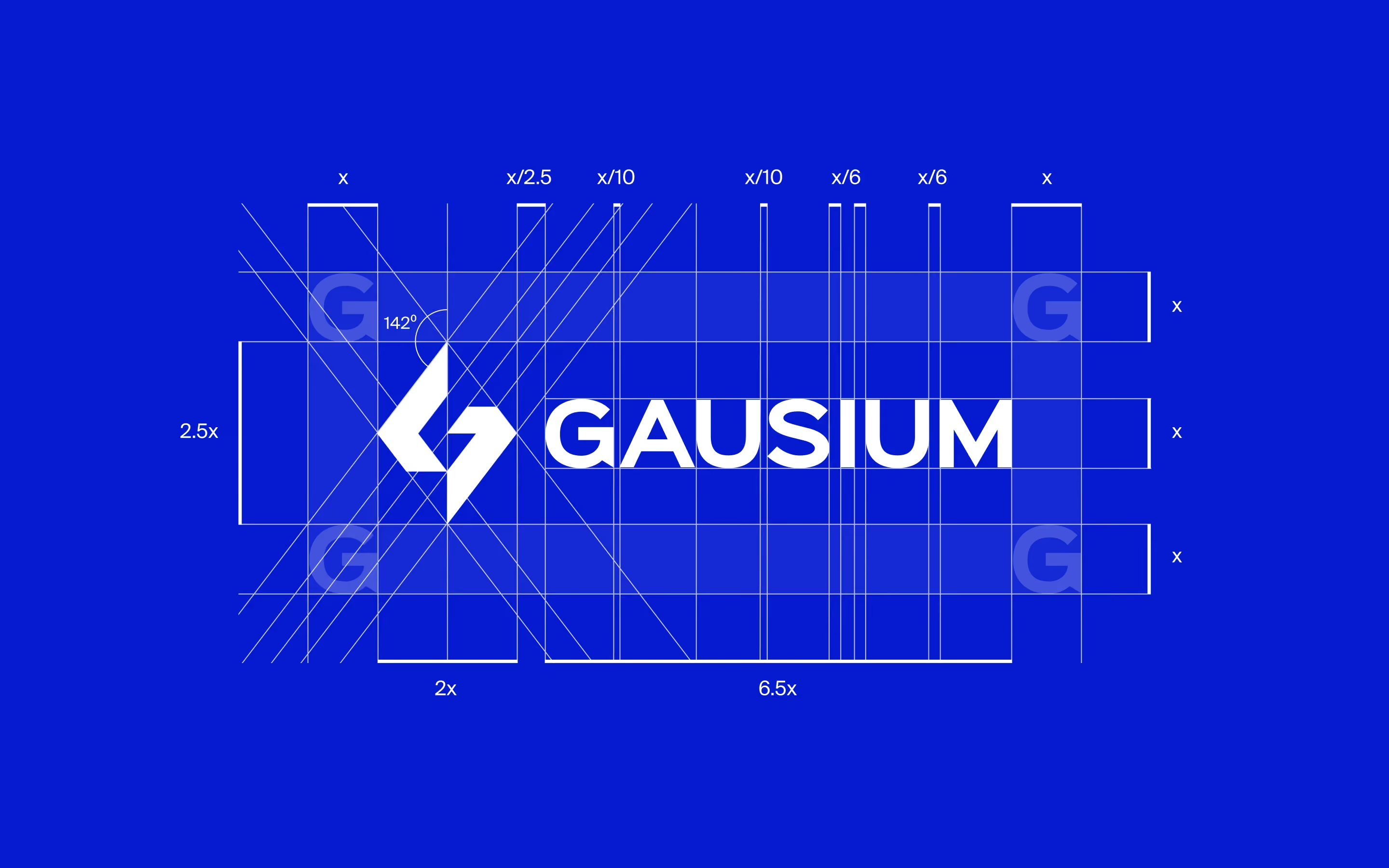
A curated mix of visuals that speak louder than words — bold, refined, and uniquely crafted.


The Types of Projects We Take On
We design catalogs for businesses with defined offerings that need structured presentation. Our work centers on companies where catalog quality directly influences purchase decisions and sales cycle length.
01
Manufacturing and industrial suppliers
Your manufacturer catalog serves as a reference tool that sits on desks for months. We build systems where engineers can locate valve specifications, compare load ratings, or identify compatible components without hunting through dense text blocks. One recent project restructured a 120-page industrial catalog—reorganizing items by application rather than family. Time-to-specification decreased by 40% based on sales team feedback, and quote requests included fewer clarification questions.
02
Specialty retail and wholesale
When you're selling curated selections to discerning buyers, the catalog needs to balance aspiration with information. We create layouts where lifestyle context and details coexist without fighting for attention. For a commercial furniture supplier, we designed a system using generous white space and restrained typography that let high-end photography communicate quality while keeping dimensions, materials, and lead times immediately scannable.
03
Professional services with productized offerings
If you've packaged expertise into defined service tiers, the catalog format helps prospects self-qualify before first contact. We structure these as decision trees—guiding readers from broad service categories to specific deliverables with pricing transparency where appropriate.
04
B2B distributors with technical inventory
Catalogs for items with multiple variants, compatibility requirements, or specification-dependent applications need flexible information design. We build component-based layouts where an item with 15 technical parameters and one with 3 both receive appropriate detail without layout strain.
Meet the Team Behind the Work
Each of us contributes our own perspective, skills, and dedication to deliver thoughtful, high-quality digital solutions for our clients around the world.
Pavel S

Vad S.

Mike V.

Dmitry M.

Maxim N.

Vladimir M.

Vlad B.

Ivan P.

David Z.

Danil K.

Eugene V.

Roman V.

Vlad H.

Pavel S.
How Our Catalogue Design Agency Approaches Projects
01
Strategic planning and architecture
We analyze your data, identify information gaps, and map customer decision pathways. This phase typically uncovers that 30-35% of current descriptions answer questions nobody asks while omitting the specifications that drive purchase decisions. We also assess existing photography and identify what needs reshooting or retouching for visual consistency.
02
Design system development
We create the foundational grid, typography scale, color system, and layout components that will carry across your entire catalog. This system must flex—handling your most complex comparison page and your simplest category divider without breaking visual coherence. The structure should be invisible to readers but rigid enough to maintain consistency across 50+ pages.
03
Production and refinement
We apply the system to your full inventory, handle pagination and flow, and prepare print-ready files with proper color profiles and technical specifications. We typically produce a printed proof at this stage—screen resolution never fully reveals how ink weight, paper texture, and binding affect the final experience.
Get Started
Let’s Build the Perfect Solution for Your Business

Other Services
We Offer







Common Pitfalls in Catalog Development
Most businesses approach catalog creation with logic that seems sound but damages conversion. These patterns emerge repeatedly across industries.
- Maximizing information density appears efficient. More specs per page mean customers get complete data faster. But overloaded layouts increase cognitive load substantially. When readers scan a page packed with 15 equally-weighted specifications, they struggle to identify differentiators. Research on catalog usability shows dense pages receive 40% less reading time—prospects get fatigued and move to competitors with clearer presentation. The cost compounds: you lose qualified buyers who simply couldn't process your offering fast enough.
- Using whatever photography exists seems budget-smart. Why reshoot when images already exist? Because visual inconsistency directly impacts perceived quality. When your premium line appears in flat warehouse lighting next to entry-level items shot professionally, the premium offerings lose value perception. E-commerce studies indicate mixed photography quality reduces willingness-to-pay by 25-30%. Customers unconsciously read inconsistent imagery as inconsistent standards.
- Organizing by internal categories makes perfect sense to your team. Your taxonomy reflects how inventory is managed or how manufacturing is structured. But customers think in applications, use cases, and problems to solve. When a contractor hunting for commercial-grade fasteners can't find them because they're categorized under "Industrial Hardware Solutions," you've created friction. Category confusion drives 20-30% of catalog abandonment in B2B markets—qualified buyers who wanted to purchase but couldn't navigate your logic.
Working With Our Studio: Investment and Timeline
We work with three to four clients at a time as your catalog design services provider. More projects would compromise the depth of work each catalog deserves. Our standard timeline runs six to eight weeks from kickoff to print-ready files.
Price varies based on catalog complexity, page count, and whether custom graphics, unique brochure elements, or photography is required.
As an industrial catalog design company, we also offer consultant services for businesses managing distribution of print materials across multiple locations. We can advise on paper stock selection, format optimization for different use cases, and binding methods that balance durability with cost efficiency. Rush projects skip the strategic foundation that makes catalogs function as sales tools rather than simple listings.
If your catalog needs to work as hard as your sales team, our catalog designers can help. Let's discuss your project.