


Startup Web Design Agency
We design digital products for early-stage startups where interface decisions directly affect activation rates, investor confidence, and product-market fit velocity. As a startup web design agency, we work with technical founders and product owners building SaaS platforms, fintech tools, marketplaces, or AI products — teams that understand design as growth infrastructure, not decoration.

Strategic Approaches for Custom Startup Website Design
Product design for startups operates under different constraints than established companies. You can't A/B test fifteen variants. Can't allocate three months to brand exploration. Can't hire specialists for every micro-interaction. As a website design agency for startups, we architect custom solutions that deliver enterprise-level thinking at startup-appropriate complexity through wireframing and prototyping. That's not a compromise — that's matching design scope to your actual stage and resources.
Onboarding sequences that reduce drop-off at critical activation moments
Conversion architecture tied to specific funnel metrics and lead generation objectives
Investor-facing interfaces that communicate scale readiness and technical sophistication
Design systems built for product evolution and scalability, not single-launch scenarios
User experience research translated into interface decisions with measurable return on investment
Technical implementation that survives rapid iteration cycles and pivots
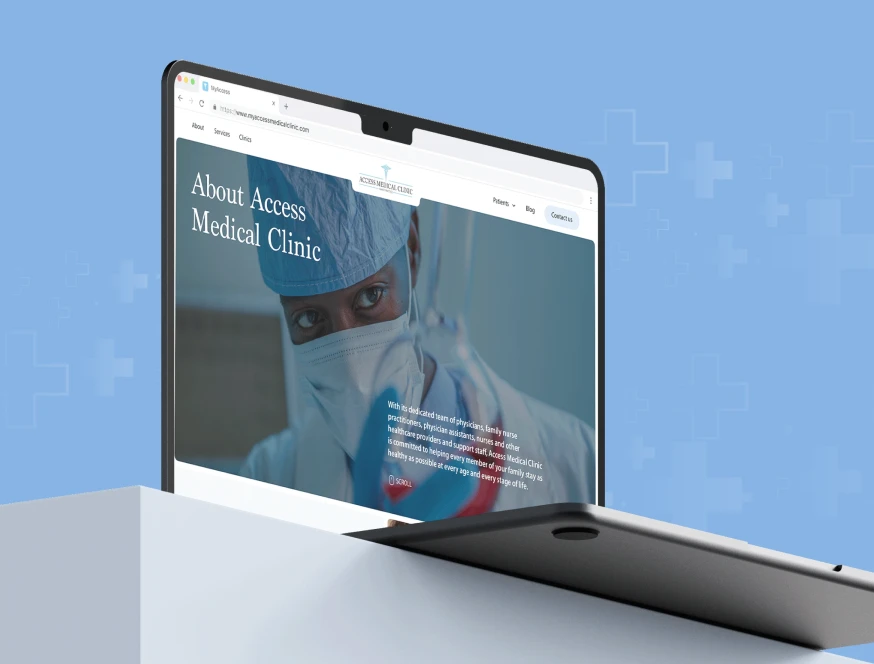
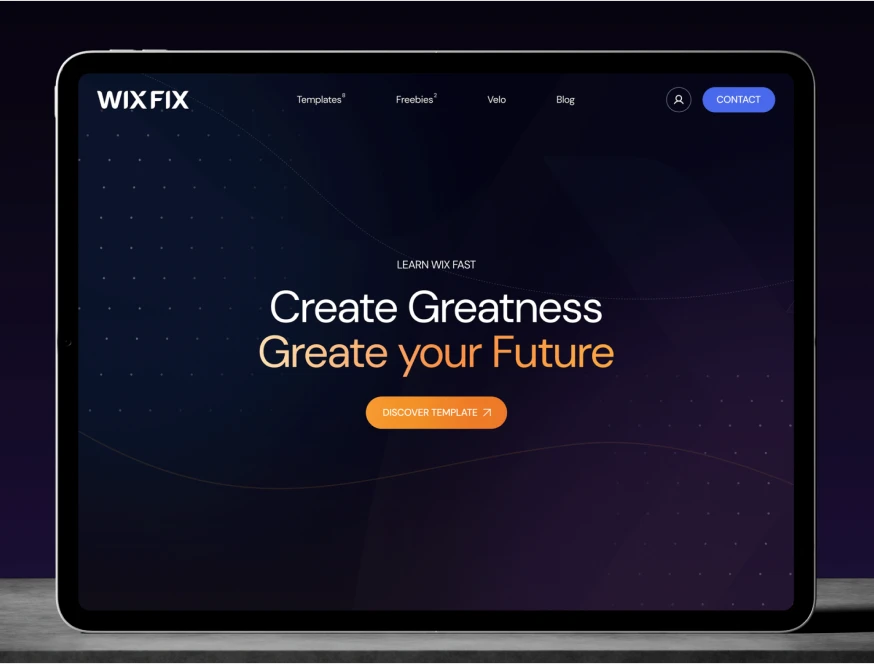
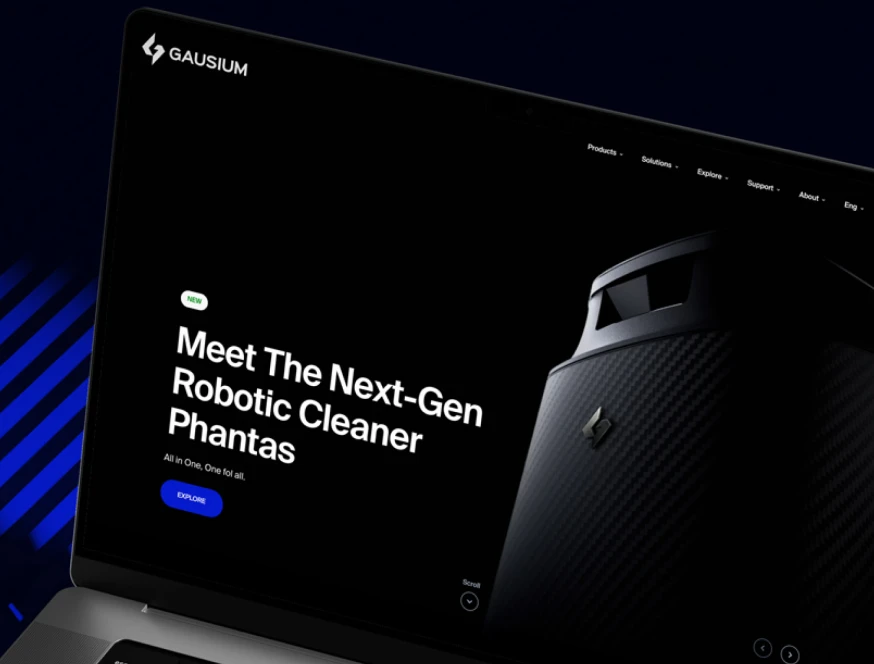
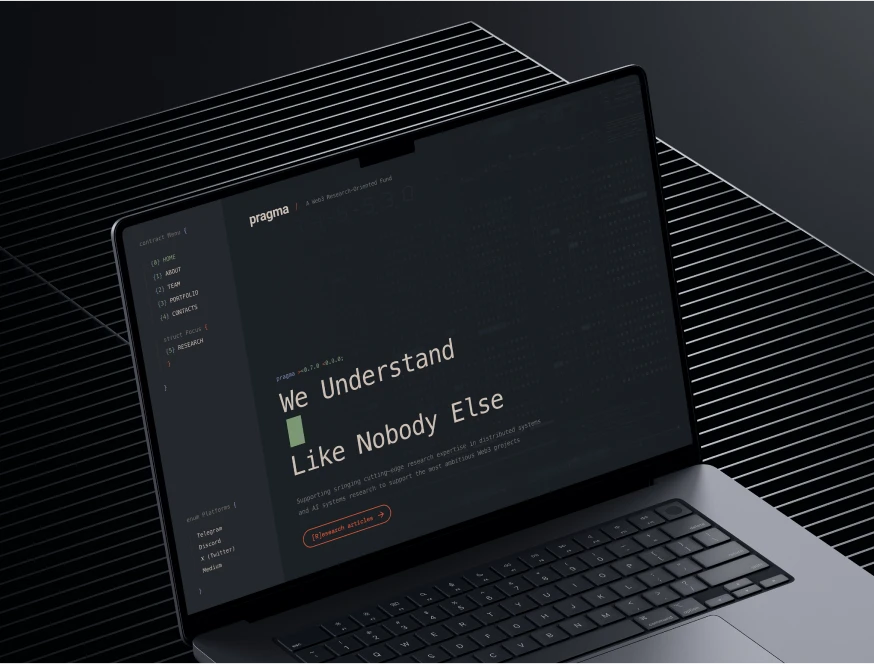
Designs Worth Remembering
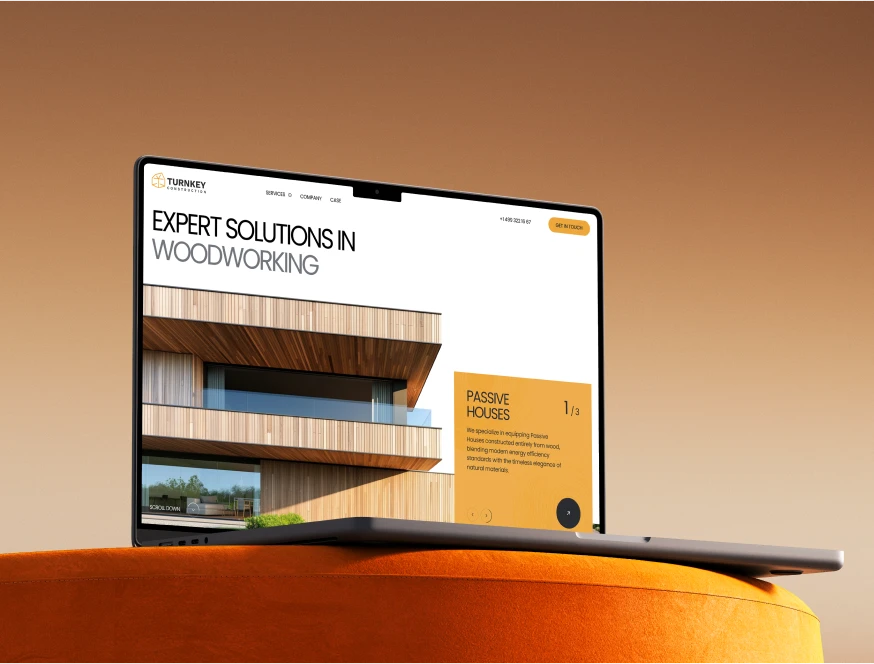
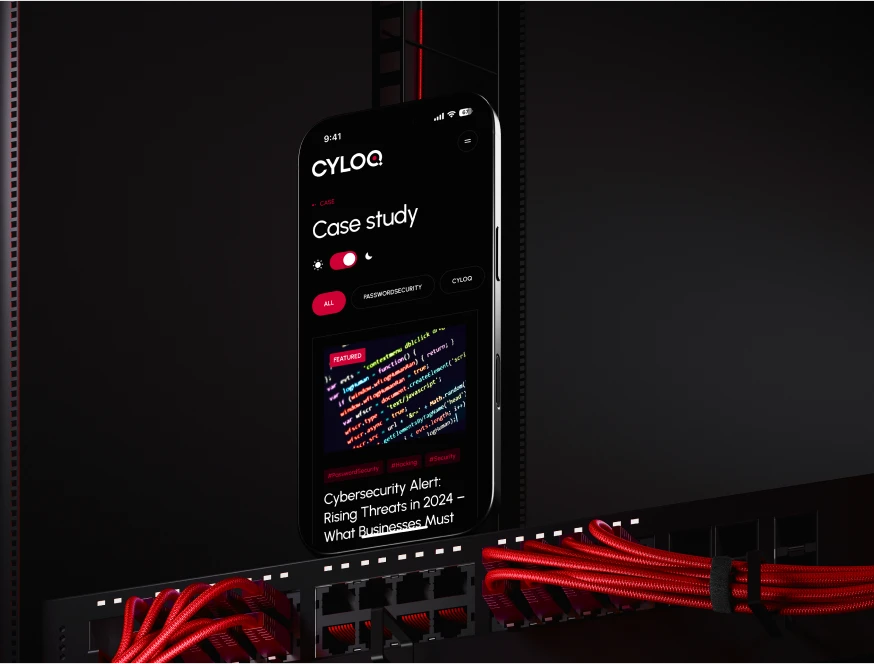
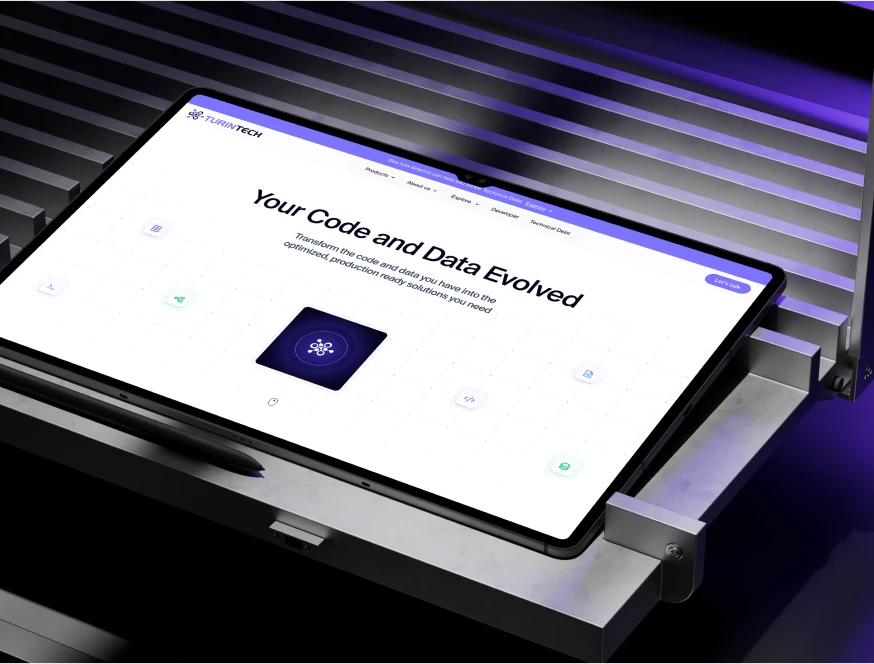
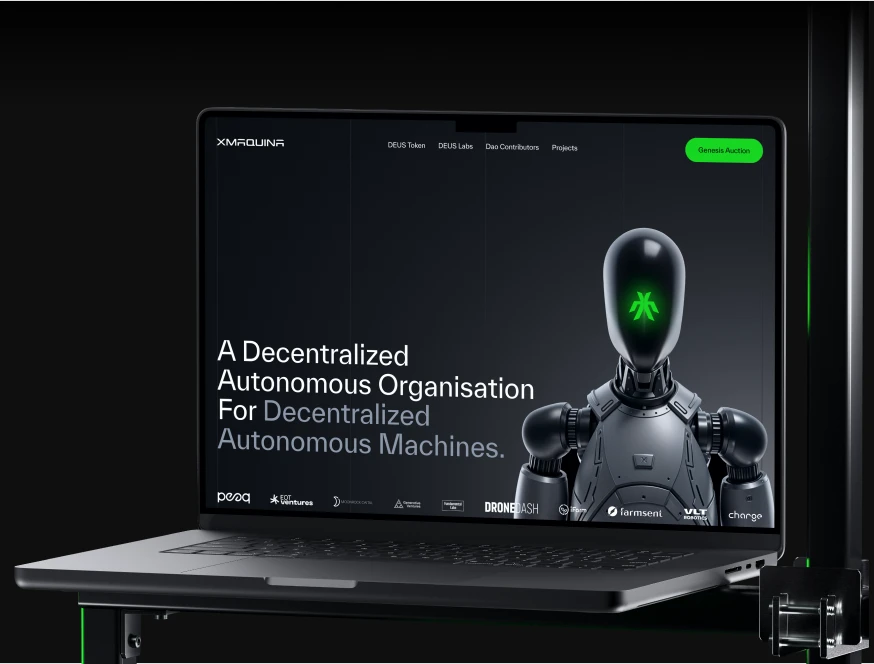
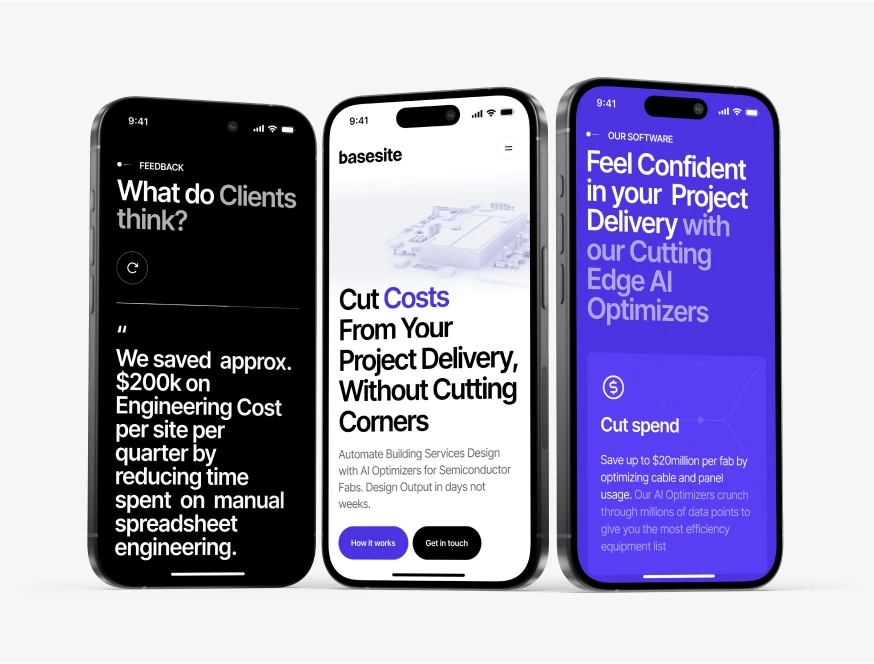
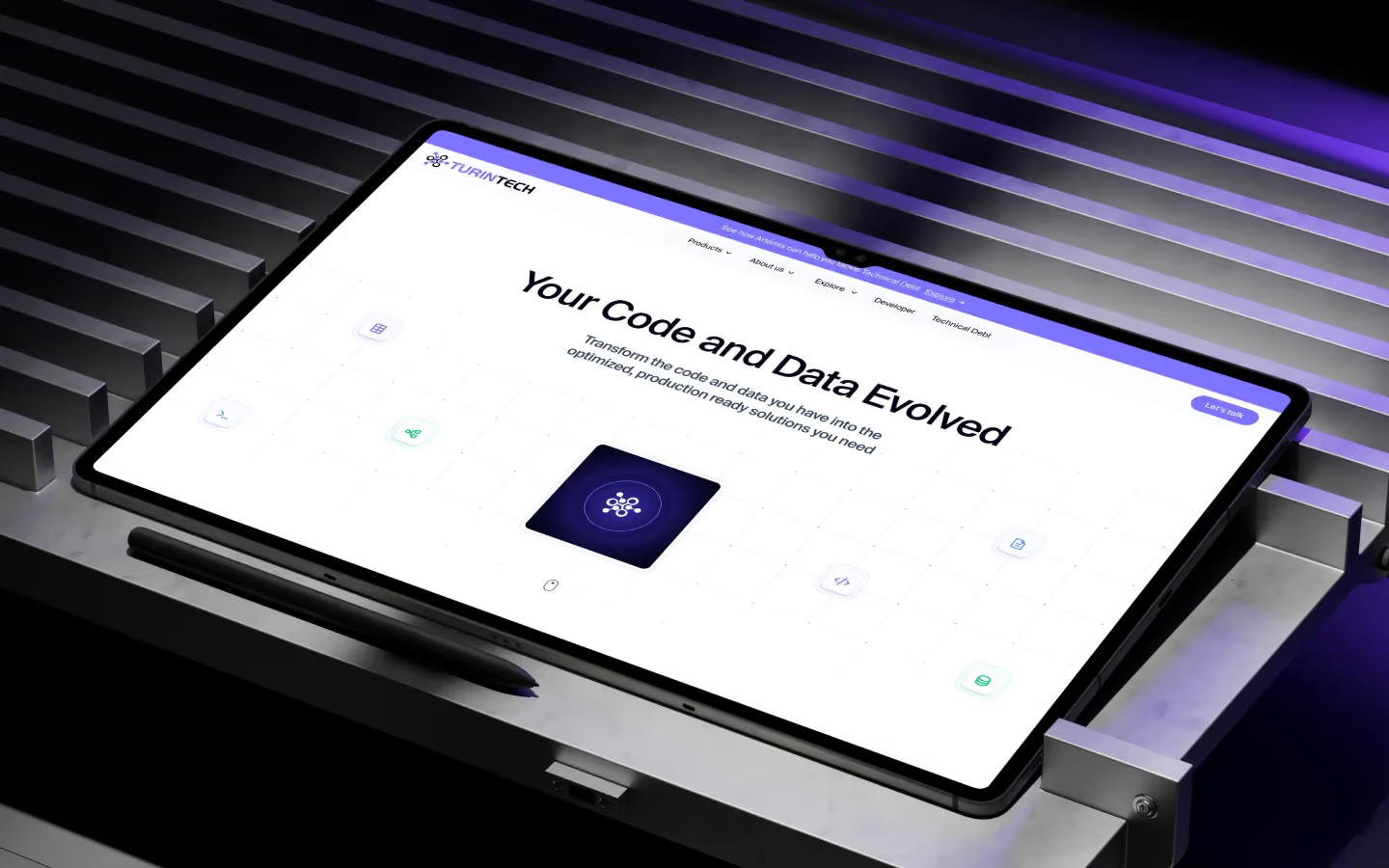
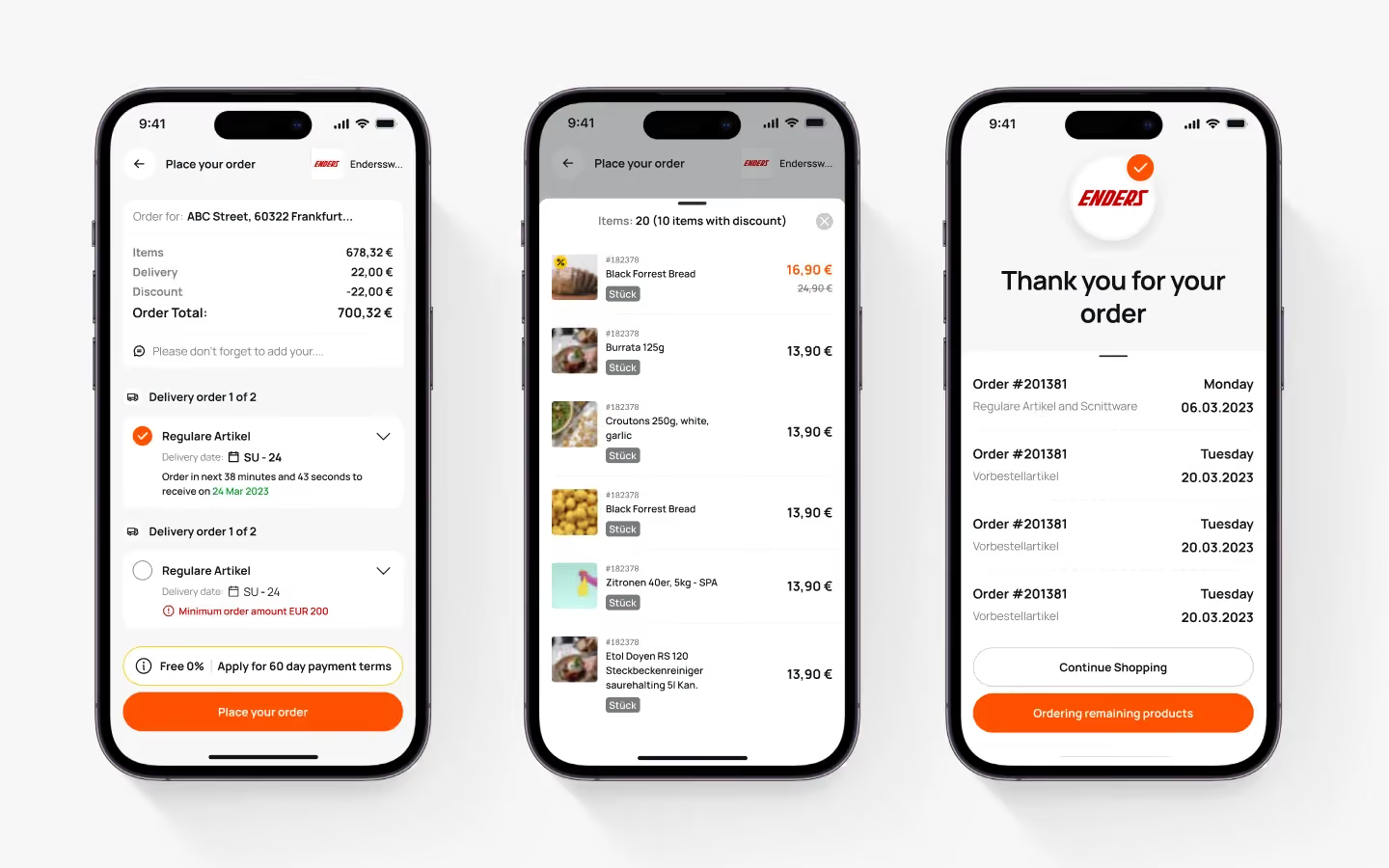
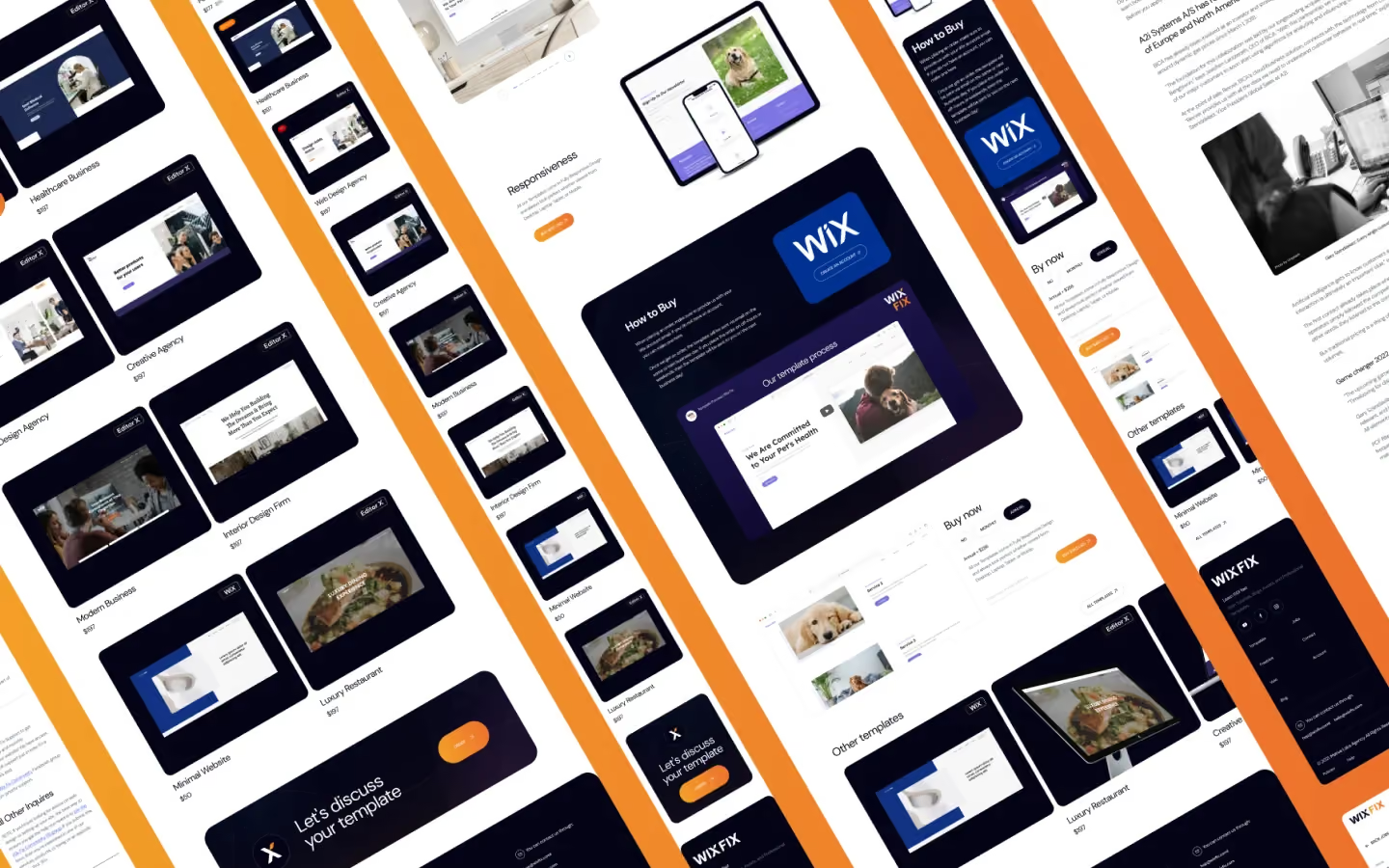
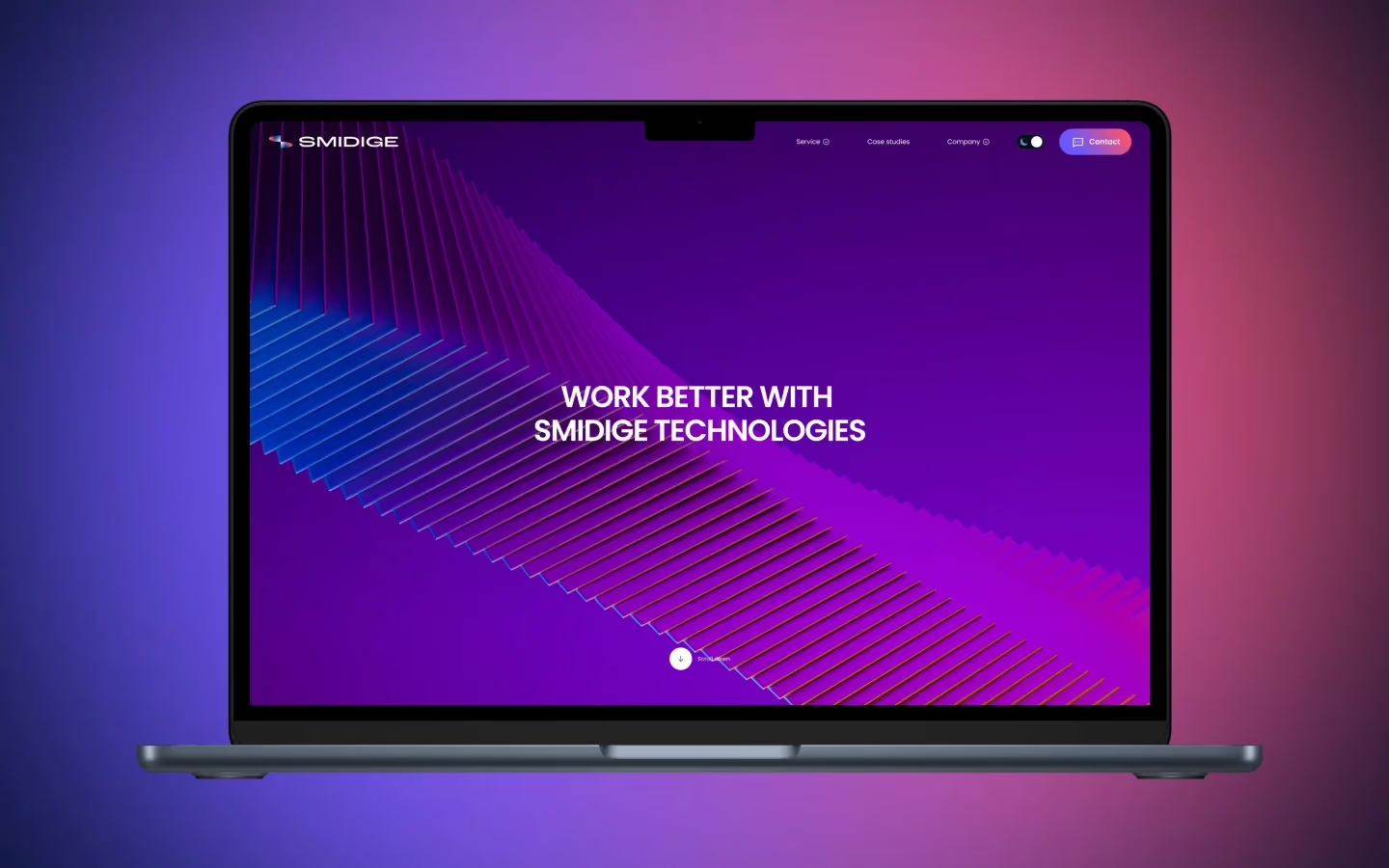
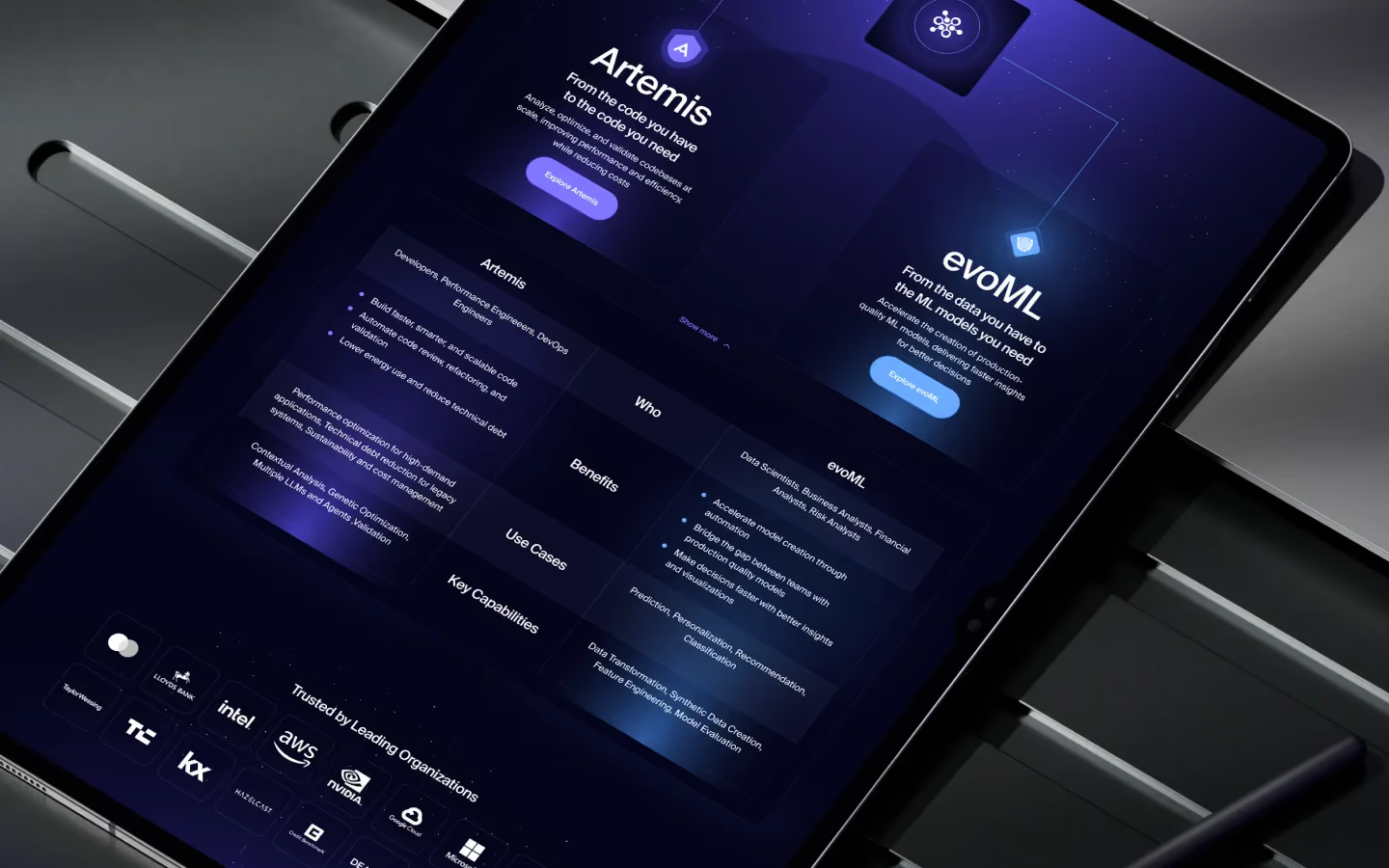
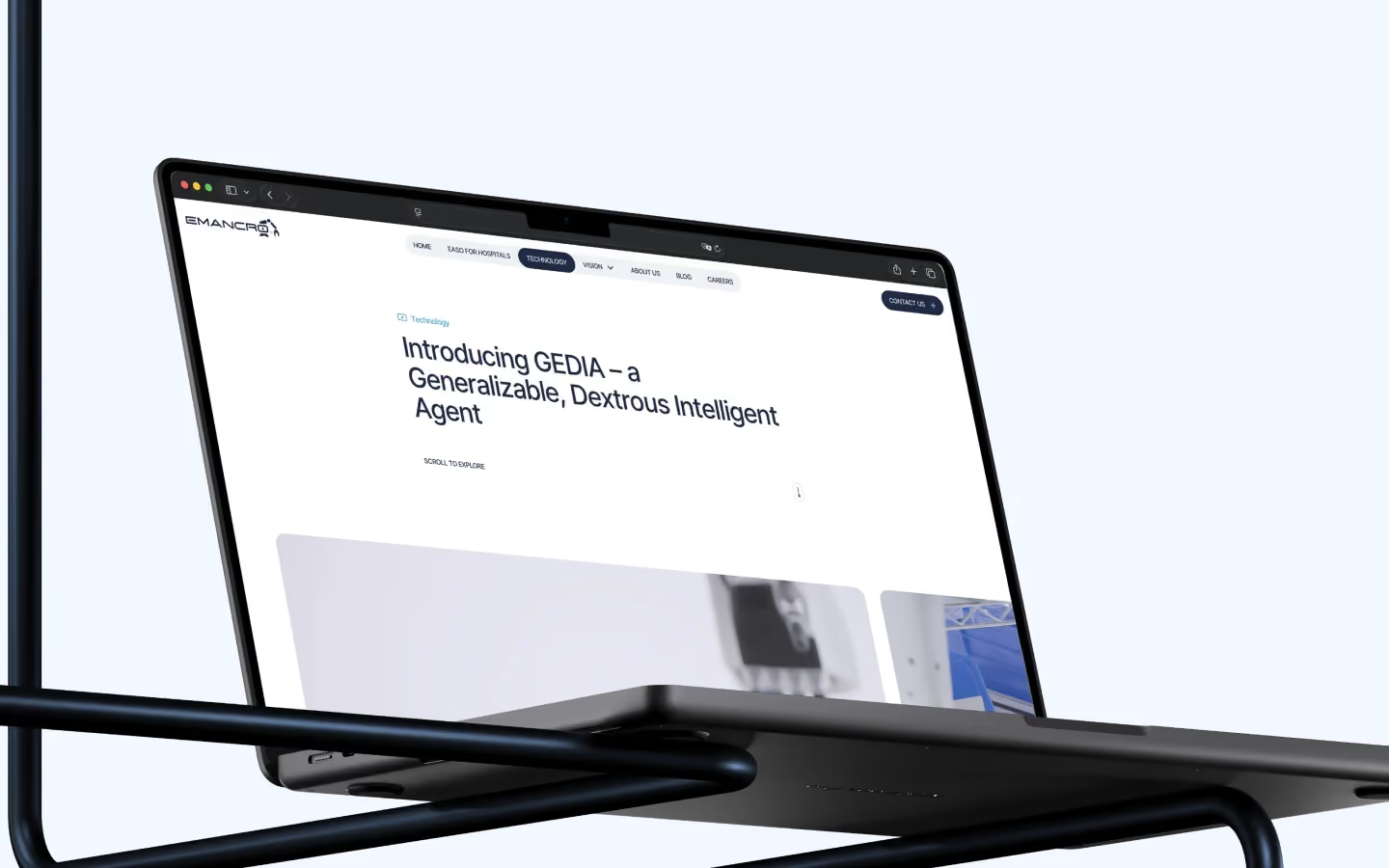
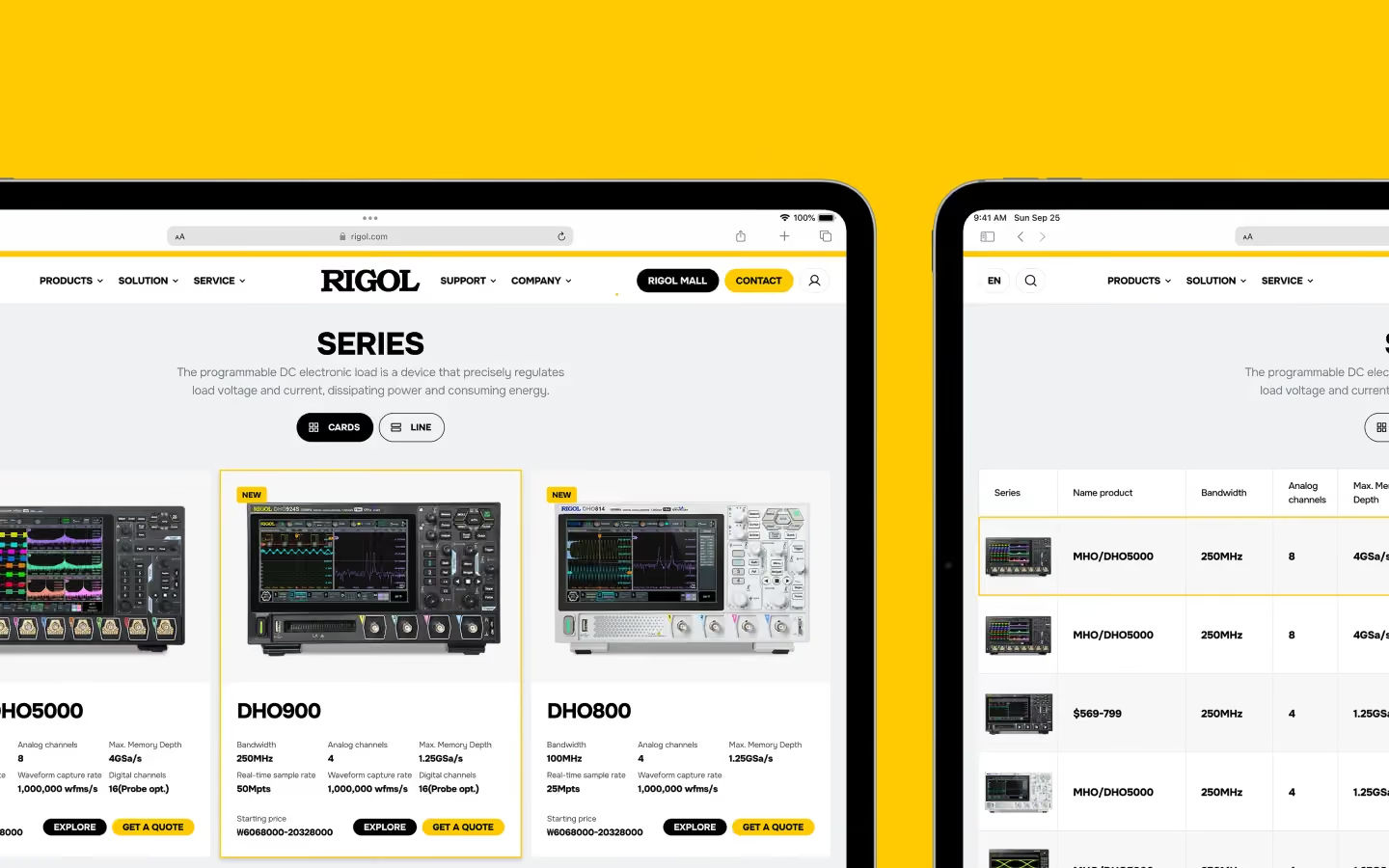
A curated mix of visuals that speak louder than words — bold, refined, and uniquely crafted.





Strategic Approaches for Custom Startup Website Design
We've analyzed why design fails for early-stage products. Three patterns emerge consistently, each carrying quantifiable business cost.
01
Jobs-to-be-Done mapping before visual execution
We start by identifying what users hire your product to accomplish, not what features you want to showcase. One fintech startup assumed users needed comprehensive portfolio analytics. Research showed they just wanted quick balance confirmation and simple transaction categorization. We stripped the dashboard to two primary actions using innovative interface patterns. Activation rate increased from 23% to 67% within the first session.
02
Assumption validation through rapid prototyping
Before committing engineering resources, we build interactive elements testing core hypotheses: Can users complete signup without friction? Do they understand value before paywall? Does the pricing page answer objections? You get validated design direction in 2-3 weeks instead of building features users won't adopt.
03
Component systems that accommodate uncertainty
Your product will change. Features will shift. User segments will evolve. We build pattern libraries that flex with product evolution — when you add the enterprise tier next quarter, design language already accommodates increased complexity. When you pivot from horizontal to vertical solution, core interface patterns translate without full redesign.
04
Resource-aware technical decisions
We spec designs your actual team can implement. If you're two developers without front-end specialists, we design within your framework's native components using responsive principles and proper typography. If you're a non-technical founder launching MVP, we implement through modern platforms with structured CMS you can manage independently. Technical constraints become design parameters, not obstacles.
Meet the Team Behind the Work
Each of us contributes our own perspective, skills, and dedication to deliver thoughtful, high-quality digital solutions for our clients around the world.
Pavel S

Vad S.

Mike V.

Dmitry M.

Maxim N.

Vladimir M.

Vlad B.

Ivan P.

David Z.

Danil K.

Eugene V.

Roman V.

Vlad H.

Pavel S.
Where Most Web Design for Startups Breaks Down
01
Premature visual complexity
happens when teams mirror enterprise products aesthetically, assuming sophistication signals legitimacy. You build elaborate dashboards before validating core workflows. Add feature tabs that won't exist for six months. Design navigation for fifty capabilities when shipping five. This increases cognitive load dramatically — users can't locate primary actions, session duration drops below 45 seconds, and you lose potential customers before they experience actual value. The cost: 40-50% of trial users churn within the first week, describing the product as "overwhelming" despite functional features. You've spent 8-12 development weeks on interface supporting imagined scale, not current reality.
02
Copying successful products without evolutionary context
means seeing Stripe's checkout and wanting that polish at MVP stage. But Stripe's interface reflects years of conversion optimization and thousands of edge cases. Mimicking surface patterns without underlying logic creates false sophistication. One marketplace client replicated Airbnb's complex filtering system for their 47 initial listings. Users couldn't complete basic searches — the paradox of choice paralyzed decision-making. We reduced filters to three essential parameters. Search completion rate jumped from 31% to 78%. The cost of premature pattern adoption: 25-30% higher support load, product-market fit delayed 2-3 months while fixing what shouldn't have been built.
03
Designing for imagined users instead of actual behavior
occurs when teams build for aspirational customer scenarios rather than current constraints. You create elaborate feature showcases when users need simple proof of concept. Or hide critical pricing information behind "sophisticated" progressive disclosure. One healthtech startup designed their practitioner dashboard assuming 30-minute daily usage sessions. Actual behavior showed 90-second check-ins between patients. Interfaces required extensive navigation to reach urgent information. We restructured around 60-second access patterns using principles of color psychology and visual hierarchy. Practitioner retention improved from 41% to 73% after month one. The cost: bounce rates climb to 65-70% versus industry benchmark 35-40%, users describe the product as "not built for how I actually work."
Get Started
Let’s Build the Perfect Solution for Your Business

Other Services
We Offer

Integrated Brand and Web Development Realities
- Speed-to-learning trumps pixel perfection. Every week in design iteration delays market validation. But rushing to development with unclear value proposition wastes engineering resources permanently. As a startup web design company, we compress discovery without eliminating it — assumption mapping, rapid prototype testing, prioritized feature validation. You get functional designs in 3-4 weeks instead of 12, without sacrificing strategic foundation. Because the real waste isn't iterating design — it's building wrong features with beautiful interfaces.
- Conversion architecture over brand exploration. Early-stage products need interfaces that convert specific user actions, not brand systems exploring identity across multiple directions. We focus on activation metrics, trial-to-paid conversion, reduced time-to-value, decreased support dependency. Our approach to branding and website design for startups means brand refinement happens after proving product-market fit, not before.
- Design as product hypothesis testing. Each interface decision represents testable assumptions about user behavior. We structure designs to validate or invalidate these quickly through strategic partnership with your team. Does simplified onboarding increase activation? Do explicit pricing tiers reduce sales friction? Does progressive feature disclosure improve retention? This approach to startup website design becomes a validation instrument supporting digital transformation, not just visual output.
When our approach doesn't fit: If you need brand exploration across multiple directions before product validation, agencies specializing in early-stage identity serve you better.
If your product requires highly specialized domain expertise — medical device interfaces, financial trading platforms, industrial control systems — teams embedded in those industries understand nuanced requirements we'd need months to learn.
If timeline absolutely demands launch in under three weeks with affordable constraints for your startup, you need template-based solutions, not strategic partnership.
If you're seeking a web development company for startups where startup web solutions will directly affect your activation metrics through integrated brand and web development for startups approach, not just aesthetic preferences — we should discuss your specific situation.