Migrate from Elementor or Divi, keep the design
Page builders make the first version of a site quick and every version after it heavier. We rebuild yours in Astro or Next.js with Sanity or Payload: the same design or a refresh, your content moved out of the builder, every URL kept or redirected.
 Yegparian PLLC (opens in a new tab)
Signs your page builder is holding the site back
Elementor and Divi are quick ways to get a WordPress site built. These are the moments teams tell us the builder became the problem.
Pages are heavy before they load a word
Every section, column and widget adds wrapper markup, and the builder’s styles and scripts load on top of the theme’s. Your Core Web Vitals pay for it.
The content only makes sense inside the builder
Divi 4 saves pages as shortcodes and Elementor saves them as its own JSON. Switch the builder off and pages show raw shortcodes or lose their layout.
Updates break the layout
Builder, theme and add-on updates change markup and class names. Custom CSS that targeted them stops matching, and someone finds out from a customer.
Divi 5 is a migration of its own
Divi 5 replaced shortcodes with a new format. Divi 4 is supported for at least 12 months from February 2026, and add-on modules not yet updated stay behind.
Licences and add-ons stack up
Pro licences, add-on packs and the plugins that speed the builder up usually renew every year. When an Elementor Pro licence lapses, its widgets and updates stop.
What happens to your builder and its add-ons
Pick what your site uses today. Each feature becomes part of the site itself, moves to a service you choose, or turns out not to be needed.
- Builder layouts and templatesA component library in codeSections and templates you reuse become typed components that editors drop into pages as blocks, with no builder markup around them.
- Posts and pagesDocuments in Sanity or PayloadWe read Elementor’s stored JSON and Divi’s shortcodes by script, turn them into structured content, and re-upload every image.
- Theme Builder headers and footersPart of the site layoutHeaders, footers and archive templates are built once in code, with their links and menus editable in the CMS.
- Elementor Forms / Divi Contact FormA form built into the siteValidated on the server, filtered for spam and sent to your inbox, CRM or Slack. Automations keep working by webhook.
- Popup BuilderPopups built into the siteBanners and modals become components with their own rules, loaded only on the pages that use them.
- Add-on packsReplaced case by caseExtra widget packs usually become a few components. The audit lists each widget in use and what replaces it.
- Motion effectsRebuilt in codeEntrance, scroll and hover effects are rebuilt with CSS or GSAP, and respect reduced motion.
- Caching and optimisation pluginsNot neededPages are built ahead of time and served from a CDN, so there is no builder output left to minify or defer.
- Redirection pluginRedirects in the configEvery old URL is mapped to its new home in the hosting config, versioned with the code.
What changes when you leave the page builder
Astro and Next.js decide how pages are built. Sanity and Payload are where your team edits. We recommend a pair after the audit.
| Feature | Astro + Sanity | Next.js + Payload | Elementor or Divi |
|---|---|---|---|
| Ownership | |||
| Content readable without a plugin | Tied to the builder | ||
| Licence renewals for core features | Elementor Pro renews yearly | ||
| Version control and code review | |||
| Speed and upkeep | |||
| Ships only the JavaScript a page needs | Per route | ||
| Lean, hand-written markup | Builder wrappers | ||
| Markup changed by third-party updates | Builder, theme and add-ons | ||
| Plugins to patch and update | Builder, add-ons and WordPress | ||
| Editing | |||
| Drag-and-drop visual editor | Click-to-edit preview | Live preview | |
| Structured, reusable content | Templates and global widgets | ||
| Pages that stay on brand | Approved blocks | Approved blocks | Any layout, any style |
Sites we've already moved
Different stacks for different jobs: a law firm on Next.js and Payload, a residential launch and our own studio on Astro and Sanity.
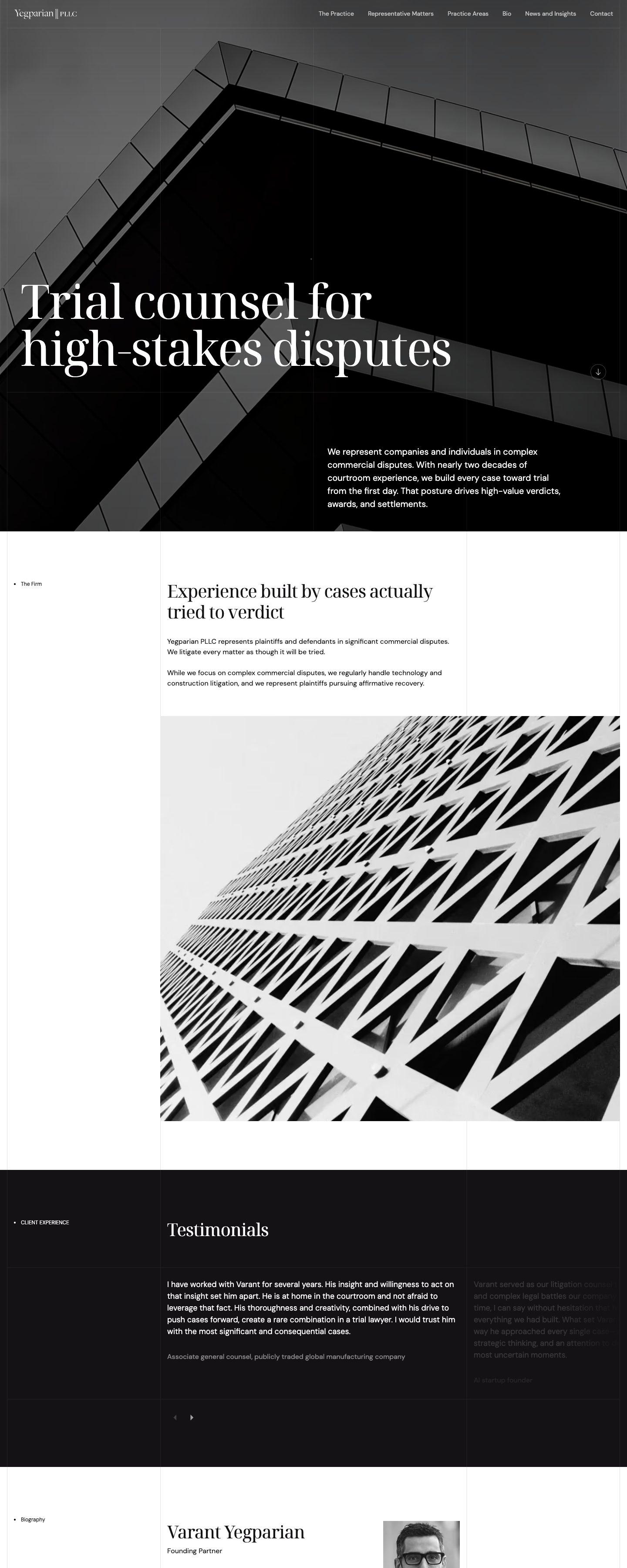
Yegparian PLLC
WordPressNext.js + Payload
An Austin trial litigation firm. Practice areas, matters and insights are Payload collections, and every page is pre-rendered and served from the edge.
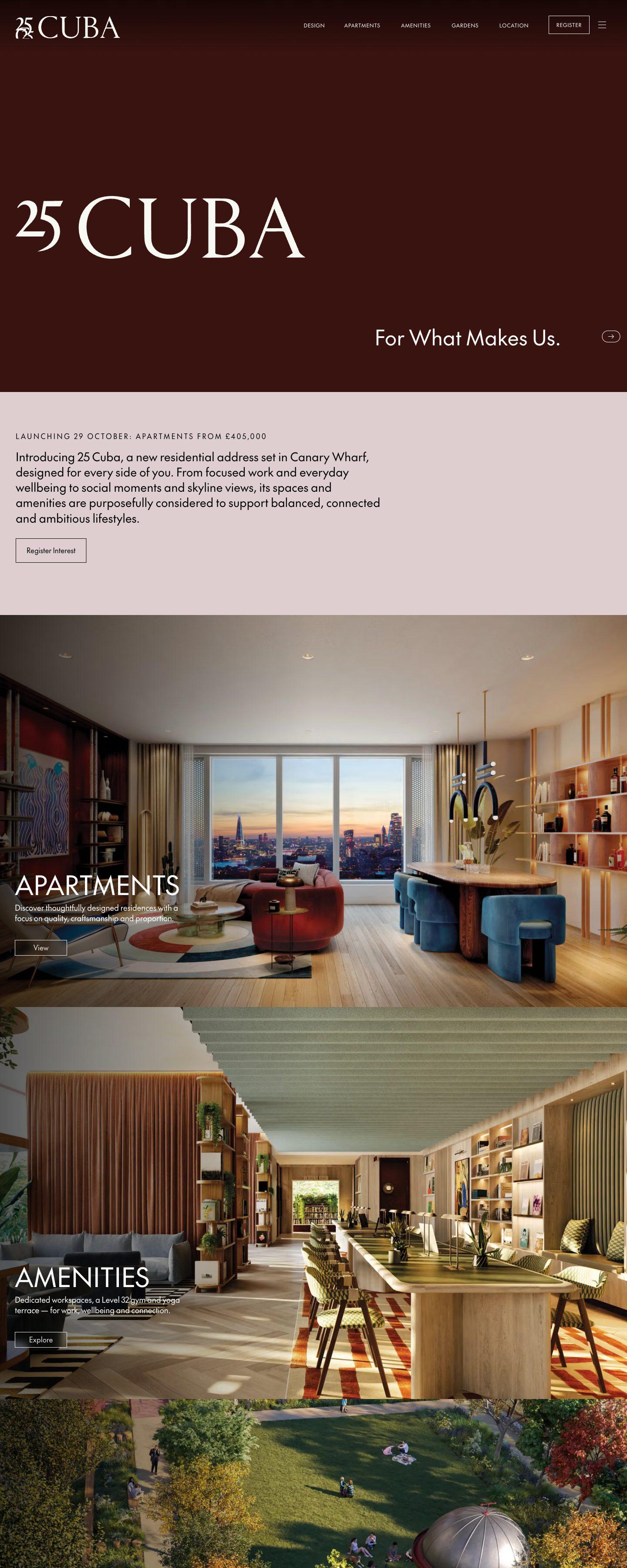
yegparianpllc.com (opens in a new tab)25 Cuba
WordPressAstro + Sanity
A new residential address in Canary Wharf. Apartments, amenities and galleries are edited in Sanity, and the site ships as static Astro pages.
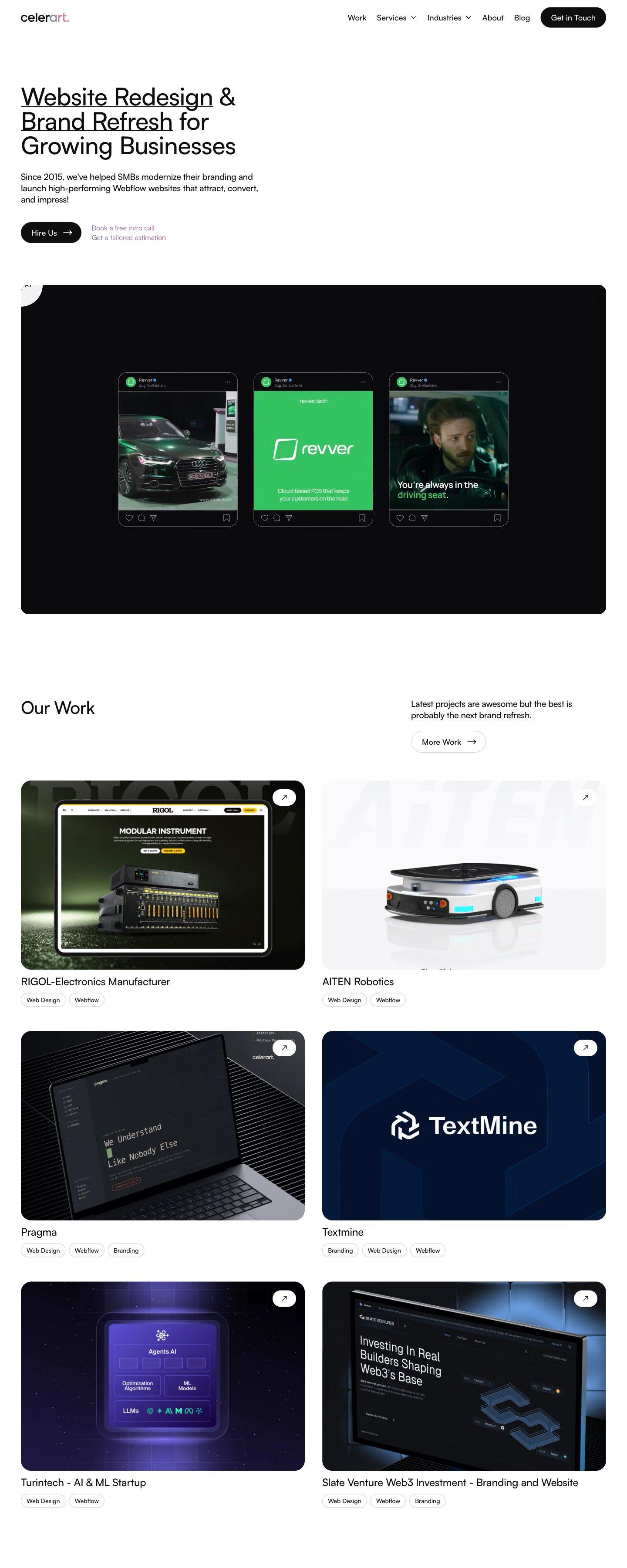
25cuba.com (opens in a new tab)Celerart
WebflowAstro + Sanity
Our own studio site. Every one of the 164 old URLs was carried over or redirected, and all content is now edited in Sanity.
celerart.com (opens in a new tab)
How we move a builder site
Your WordPress site stays live until the new one is ready. The switch is a DNS change, not a weekend of downtime.
Audit
Audit
We crawl every URL, list every template, widget, add-on, form and plugin, and export your rankings, so nothing is lost by accident.
Content model
Content model
Pages, posts and builder templates become a clean schema in Sanity or Payload, shaped around how your team actually edits.
Content import
Content import
We read Elementor’s stored JSON and Divi’s shortcodes from the database by script. Text and images come out as structured content, and the builder markup stays behind.
Front end
Front end
We rebuild the design in Astro or Next.js: the same look, or a refresh if one is due. Every template is checked against the live site.
Redirects and launch
Redirects and launch
Every old URL gets a permanent redirect to its new address. Metadata, sitemaps and structured data are compared before the DNS switch.
Handover
Handover
Your team gets a walkthrough of the new editor. Then the builder licences, add-ons and WordPress hosting can be cancelled.



Questions about leaving Elementor or Divi
Not if the move is planned. Every URL keeps its address or gets a permanent one-hop redirect, and titles, descriptions, social images and structured data are carried over and checked before launch.
A converter copies the builder’s output, wrappers and all, into static files nobody can edit. You keep the weight and lose the editor. We rebuild the design as clean components and move the content into a CMS your team can use.
By script. Elementor stores each layout as JSON in the WordPress database, and Divi 4 stores it as shortcodes in the post. We read both, keep the text, images and links, and drop the layout markup.
If the site works and your add-on modules support Divi 5, upgrading can be the cheaper step. If you are also fighting speed, updates and plugins, the migration effort is better spent leaving. The audit compares both.
It is the same process, with extra work on the builder. Most of the effort goes into reading builder content and rebuilding its templates as components. If your site uses the block editor rather than a builder, the WordPress page is the better fit.
Yes. Editors build pages from approved blocks with live preview, and in Sanity they can click any text on the preview to edit it. What they lose is styling every element by hand, which is usually what pulls pages off brand.
It depends on the number of pages, templates and add-ons. After the audit you get a fixed scope and timeline, and the WordPress site stays live until launch day.