

Overview
Pet owners decide whether to trust your clinic within seconds of landing on your website. We specialize in veterinary web design that transforms that critical first impression into scheduled appointments—not lost opportunities.
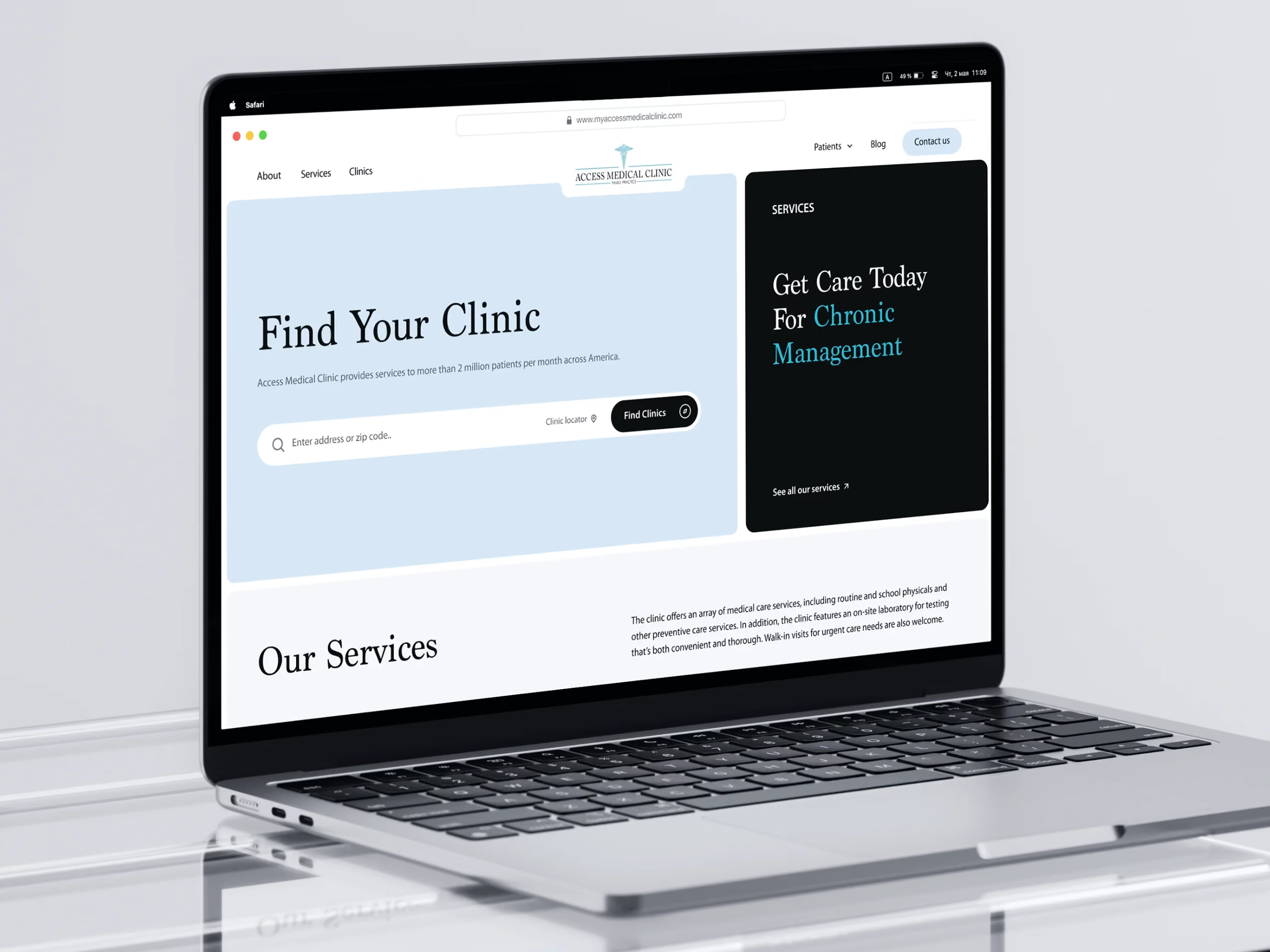
Visual hierarchy that matches anxious decision-making
When someone's searching for a vet, they're often worried. Their cat stopped eating. Their dog limped after a walk. We structure pages to answer immediate questions first: services offered, emergency availability, location. Secondary information—staff bios, awards, blog posts—comes after. This reduces cognitive load during emotional moments.
Photography that signals real care
Generic stock photos undermine credibility. We help practices showcase their actual veterinarians, real exam rooms, and genuine animal interactions. One urban clinic replaced templated imagery with photos of their team treating patients. Client consultation requests increased 34% in eight weeks.
Appointment booking designed for different urgency levels
Emergency visits need different forms than wellness checkups. We create booking flows that adapt based on visit type—capturing essential details fast for urgent cases, gathering comprehensive history for routine appointments. A multi-location practice reduced average booking time from 4 minutes to 90 seconds using conditional form logic.
Mobile experience optimized for parking lot decisions
67% of veterinary website traffic happens on phones. Often from car seats while holding a sick pet. We prioritize responsive interfaces, prominent phone numbers, and streamlined navigation that works one-handed.
What Converts Concerned Pet Owners Into Scheduled Clients
Effective veterinary web design mirrors how people actually search and think when their animal needs care. Not how you organize your internal departments.
Content structured around actual questions
Most practices are organized by department: "Dental Services," "Surgery," "Diagnostics." But pet owners search differently. They type "does my dog need teeth cleaning?" or "what happens during spay surgery?" We write pages that mirror these natural questions, include transparent process explanations, and address common fears. For a specialty clinic, this restructuring reduced bounce rate from 61% to 43%.
Progressive information disclosure
Not everyone needs the same depth. First-time visitors want basics—what you treat, where you're located, whether you're accepting patients. Existing clients might need prescription refill instructions or portal access. We layer content so each audience finds their path without wading through irrelevant information.
Credibility markers placed where they matter
AAHA accreditation means something, but only if explained. We don't bury credentials on an "About" page. Surgical certifications appear on surgery pages with context about what they mean for patient safety. Client testimonials sit adjacent to relevant services—orthopedic success stories near the orthopedic surgery description.
Selective pricing transparency that qualifies leads
Some practices avoid listing any prices, fearing it looks cheap or locks them into rates. But strategic transparency—exam fees, wellness package costs, common procedure ranges—actually improves lead quality. You get fewer price-shopping calls and more people ready to book. One practice reported 28% fewer "just checking prices" calls after adding a pricing guide.
Multiple conversion paths for different readiness levels
Some visitors book immediately. Others need to research, call with questions, or download care guides first. We design for all scenarios: prominent scheduling buttons, click-to-call functionality, email inquiry forms, and downloadable resources. Different intents need different conversion options.
Types of tasks
Our diverse team has experience designing almost anything your business might ever need.
Technical Infrastructure That Supports Practice Performance
Your website should grow with your practice—new locations, additional services, team changes—without requiring a developer for every update.
Content management for non-technical staff
Your office manager should update holiday hours or add a new veterinarian without calling a developer. We build on Webflow because its visual editor makes routine updates simple. No code required. One practice eliminated $3,200 in annual developer maintenance costs by handling updates internally.
Speed optimization for media-rich content
Veterinary sites need photos and videos—facility tours, procedure explanations, team introductions. We optimize asset delivery so pages load under 1.5 seconds even with visual content. Slow sites lose 40% of visitors before content renders, directly impacting performance and engagement.
Practice management system integration
Your website should connect to your scheduling software—ezyVet, Digitail, Rhapsody, Cornerstone. We build API connections or use middleware like Zapier to sync availability, reduce double-entry, and keep schedules accurate across platforms. Seamless integration improves both staff efficiency and client experience.
Local SEO architecture for multi-location practices
Each clinic location needs its own page with unique content, not duplicates. Smart veterinary web design structures location pages to rank for "[city] veterinarian" searches while maintaining brand consistency. Proper schema markup helps Google understand your service areas and specialties, improving visibility in mobile search results.
Smart forms that reduce administrative burden
Form logic adapts based on input. Select "emergency" and different fields appear than "annual checkup." This captures better information upfront, routes requests to appropriate staff, and reduces back-and-forth clarification. We track form analytics to continuously optimize completion rates.
Trusted by Innovators in Veterinary Care

Common Pitfalls in Website Design for Veterinary Clinics
Many clinics invest in redesigns that don't improve results. The problems usually trace to three patterns we see repeatedly in veterinary website design.
Homepages that try to show everything at once
Services, team bios, mission statements, awards, recent blog posts, client testimonials—all fighting for attention. The thinking makes sense: more information builds trust. But this creates decision paralysis. A visitor wondered "do they treat rabbits?" can't quickly find the answer among competing elements. Bounce rates hit 68-72% compared to industry benchmarks of 45-50%. You lose a third of potential clients before they understand what you offer.
Generic service descriptions copied across all specialties
"We provide expert care using advanced techniques" works equally well for dentistry, ophthalmology, and orthopedics, right? Wrong. Someone searching "dog eye discharge treatment" needs specific information about diagnostic methods, treatment options, recovery expectations. Generic content doesn't match search intent. It doesn't rank. A practice we audited had identical structure across twelve pages. Organic traffic ran 60% below industry averages for their market size.
Extensive intake forms before the first visit
Asking new clients to fill five pages of medical history before meeting seems logical—better preparation means better care. But it creates massive friction. The abandonment rate on these forms runs 35-45%. These aren't people who changed their minds about needing a vet. They're calling your competitor with a simpler process.
Template designs that ignore veterinary-specific needs
Many agencies apply the same design system to every industry. But effective web design for veterinarians requires specific considerations: emergency contact prominence, species-specific service filtering, vaccination reminder systems, and pet portal access. Generic templates miss these requirements entirely.
Mobile experiences designed desktop-first
When someone's dog just ate chocolate, they're googling from their phone in a panic. If your mobile site requires zooming, has tiny tap targets, or hides the phone number in a menu, you've lost them. Responsive design isn't optional—it's critical for capturing 67% of your traffic and maintaining proper navigation flow.
We always deliver.
Proven by our work.
Trusted by people.







Frequently Asked
Questions
You’ll probably find an answer to your question here. If you’re still not sure or want to clarify something, just drop us a line at hello@celerart.com. Whether you need creative web design builders, we’re here to help.
Get Started
Let’s Build the Perfect Solution for Your Business
